
Gypsum False Ceiling Designs for 2026
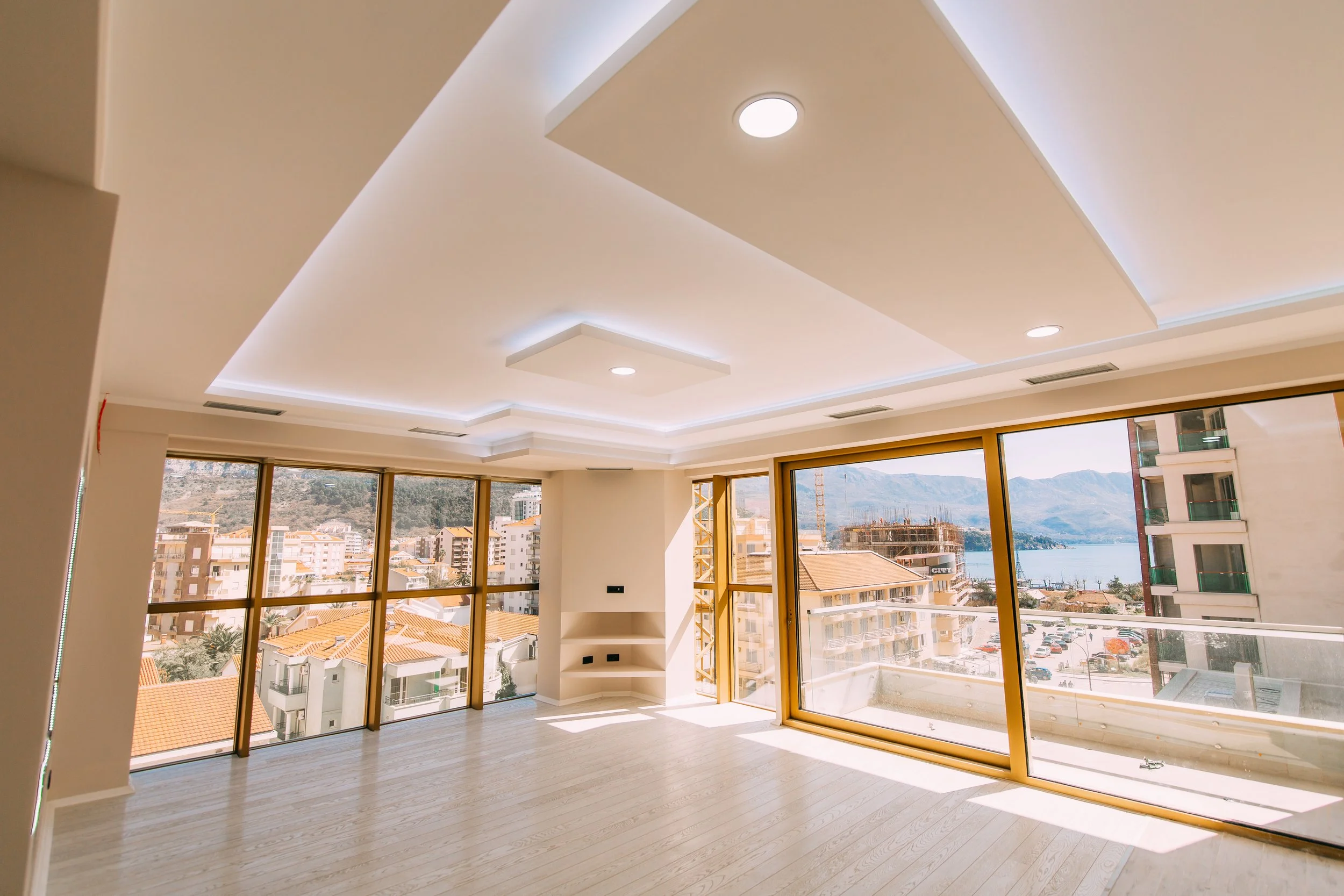
Have you ever wondered why some homes instantly feel premium while others, despite having good furniture, still look incomplete? Just like wearing a good outfit but forgetting the final accessory that pulls your look together. That missing element in your home is the ceiling. A gypsum false ceiling works like that final touch. It creates a sleek, cleaner, and more finished look that instantly lifts your entire space. It’s simply a secondary ceiling made from gypsum boards installed below the main ceiling to improve design, lighting, and comfort.
If you want to choose the best designs and want a simple, practical guide to everything covered in gypsum false ceiling designs for 2026, including smart lighting trends, geometric layouts, minimalist ideas, and room-specific recommendations, then this blog will walk you through all of it clearly and step by step.
Key Takeaways
What a gypsum ceiling is and how it improves your space
Learn the latest 2026 gypsum ceiling design trends for Indian homes
Get room-specific gypsum layout ideas for living rooms, bedrooms, and kitchens
Compare materials to choose the right option for each space
What Is a Gypsum False Ceiling?
A gypsum false ceiling is a secondary ceiling panel made using factory-finished gypsum boards that are suspended from the main ceiling with a metal framework. It helps conceal electrical wiring, improves lighting layout, and enhances acoustics while giving your room a smooth, refined finish. These ceilings are lightweight, versatile, and work well in almost every room type.
Also Read: Top 10 Plus Minus POP Design Ideas for Hall in 2024 | Modern False Ceiling Trends
Latest Gypsum False Ceiling Trends for 2026
1. Smart Lighting Systems

The most popular trend nowadays is smart LED integration within the ceiling framework. Gypsum makes it easy to carve channels for strip lights or recessed lighting. These systems accommodate colour-changing lights, dimming, and even AI-based lighting that adjusts according to the time of day. This trend is best for living rooms and bedrooms, where ambience plays a vital role.
2. Curved and Wavy Gypsum Designs
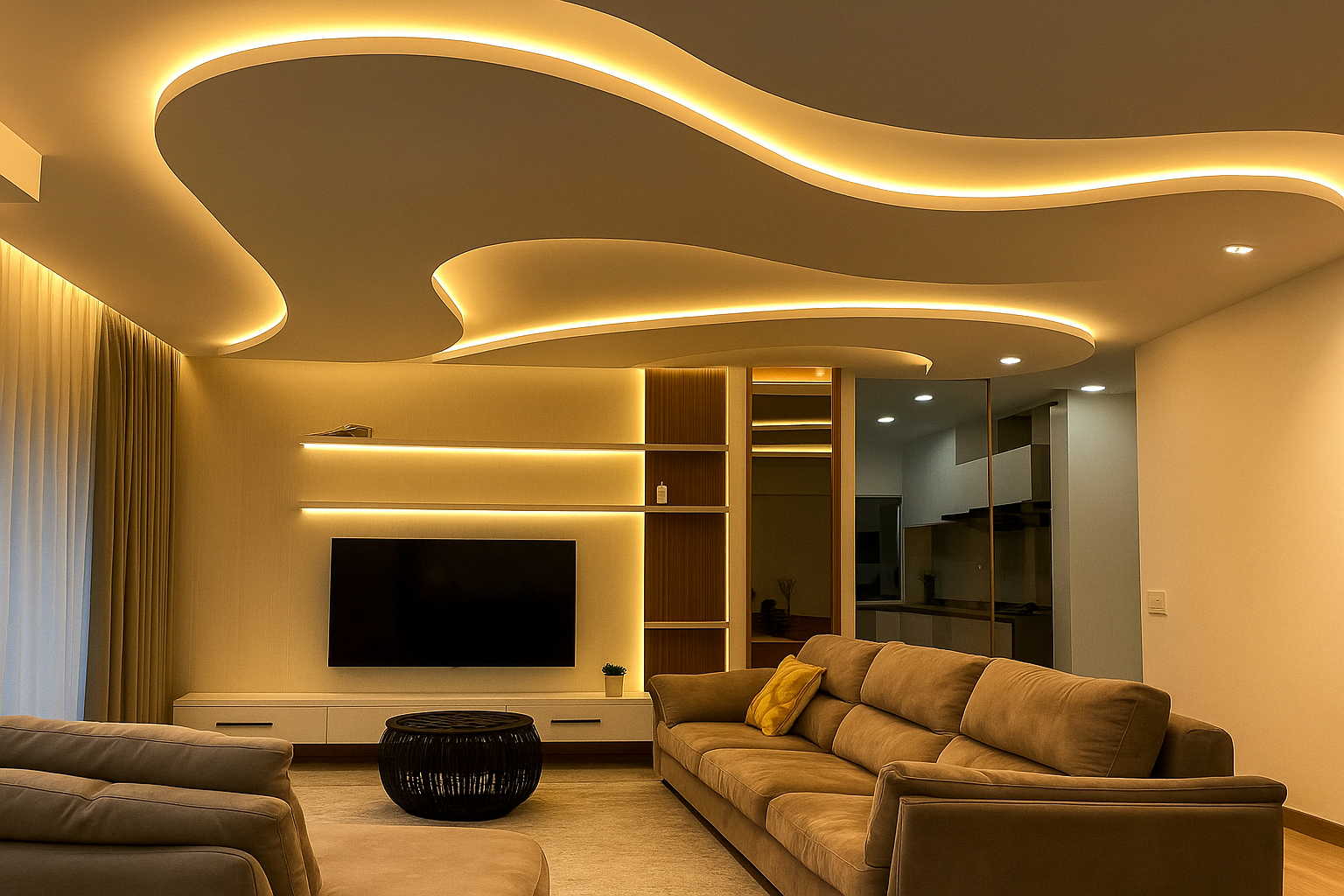
Instead of sharp, boxy lines, many Indian homes are switching to soft curves, flowing arcs, and wave-like elements. These designs make the ceiling look premium and add a sculptural quality to the room. Curved gypsum layouts work especially well in hallways, lounges, and modern living rooms.
3. Biophilic Ceilings
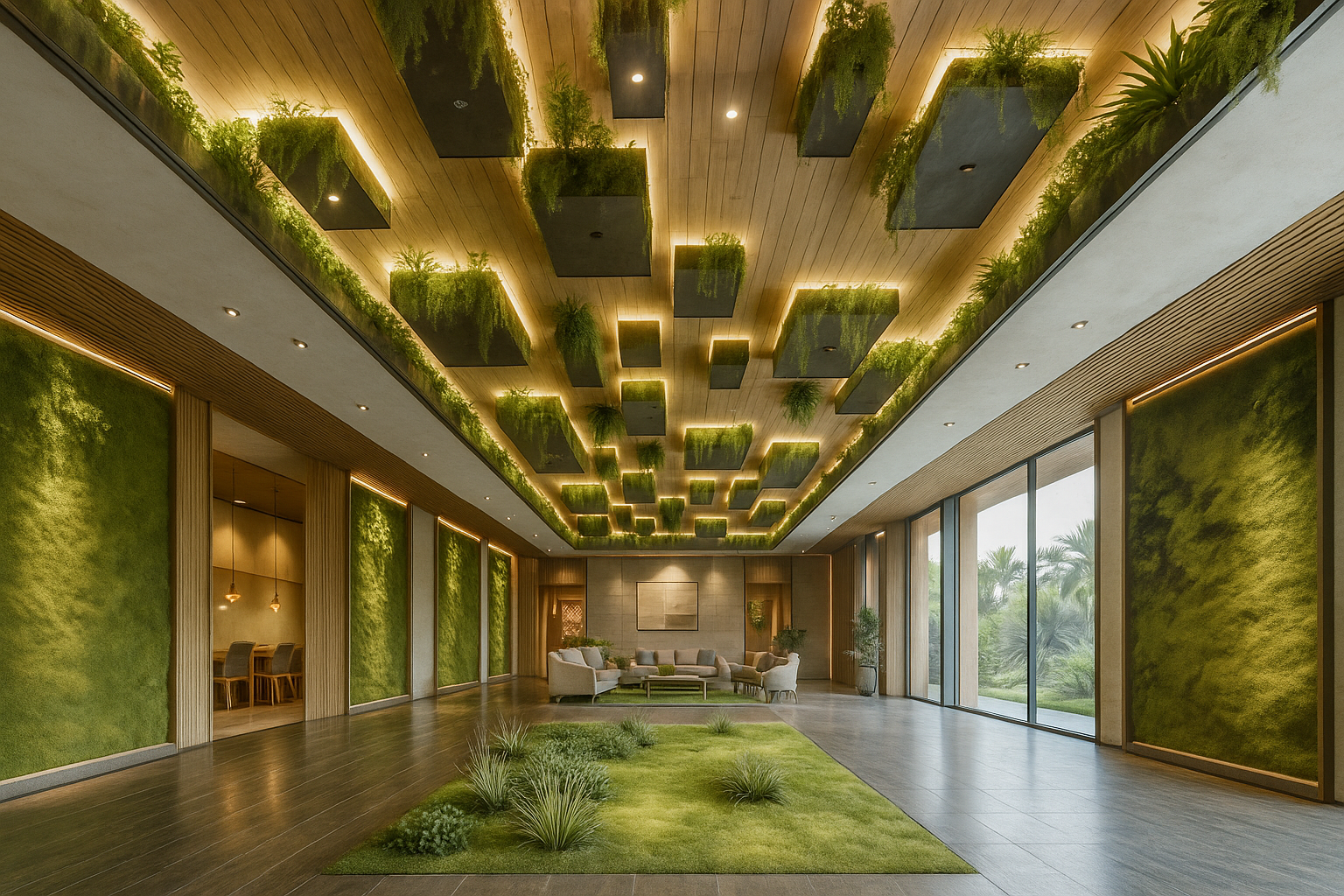
This is for people who like home aesthetics inspired by nature. Biophilic ceilings combine gypsum with wooden textures, earthy shades, and organic shapes. The outcome is calming and warm and will suit the natural aesthetic of your house. Furthermore, when combined with a warm cove light, this look resembles a resort.
4. Simple Minimalist One-Layer Designs
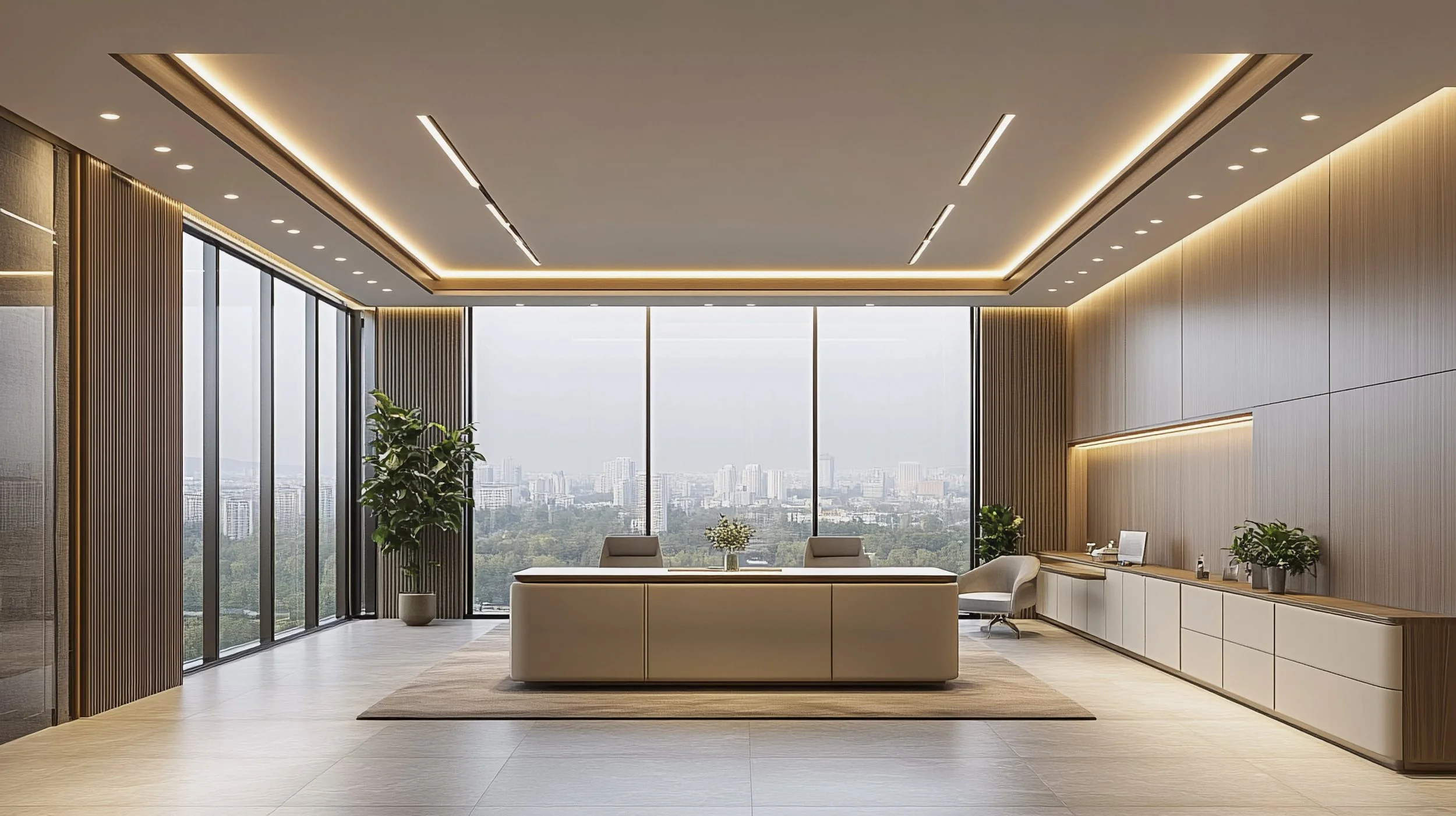
This is a trend in small Indian homes or low-ceiling spaces. These types of homes will have clean, flat and smooth single-layer designs that incorporate soft lighting from cove/recessed fixtures. The design is minimalist, so the overall impression of the space is larger and more open, and therefore, the focus is on simplicity.
5. Geometric/Abstract Patterns
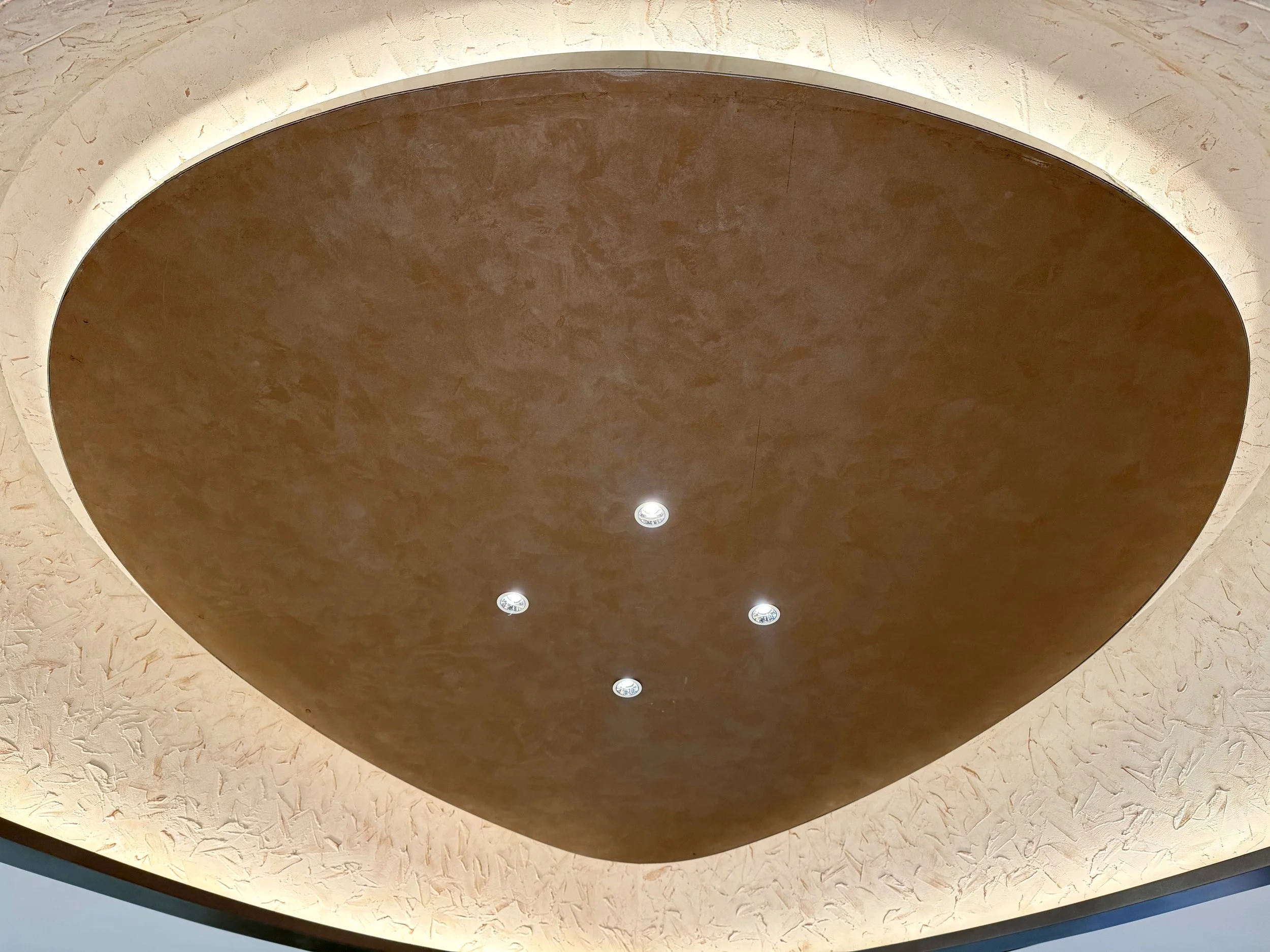
Today, geometric and abstract patterns such as squares within squares, circles, and symmetrically arranged lines are making a comeback in modern home design. With halogen or spotlighting, these patterns create dramatic shadows and depth. Best suited for modern living rooms and dining areas.
6. Multi-Functional & Sustainable Ceiling Concepts
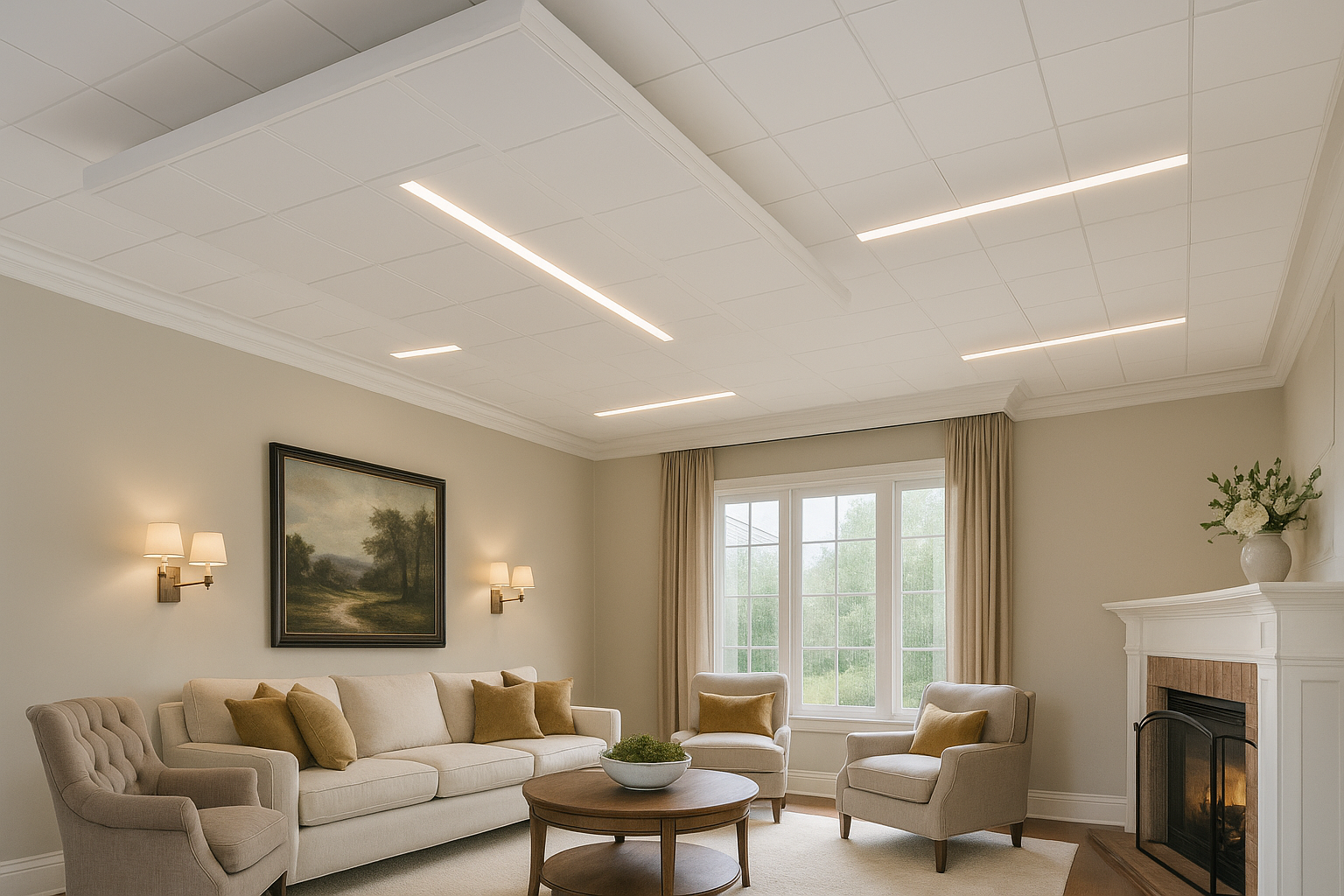
With sustainability in demand, some new ceilings integrate bamboo fibre panels, recycled materials, or acoustic baffles. Gypsum also pairs well with HVAC diffusers and hidden vents for a cleaner look.
7. The Night Sky Ceiling
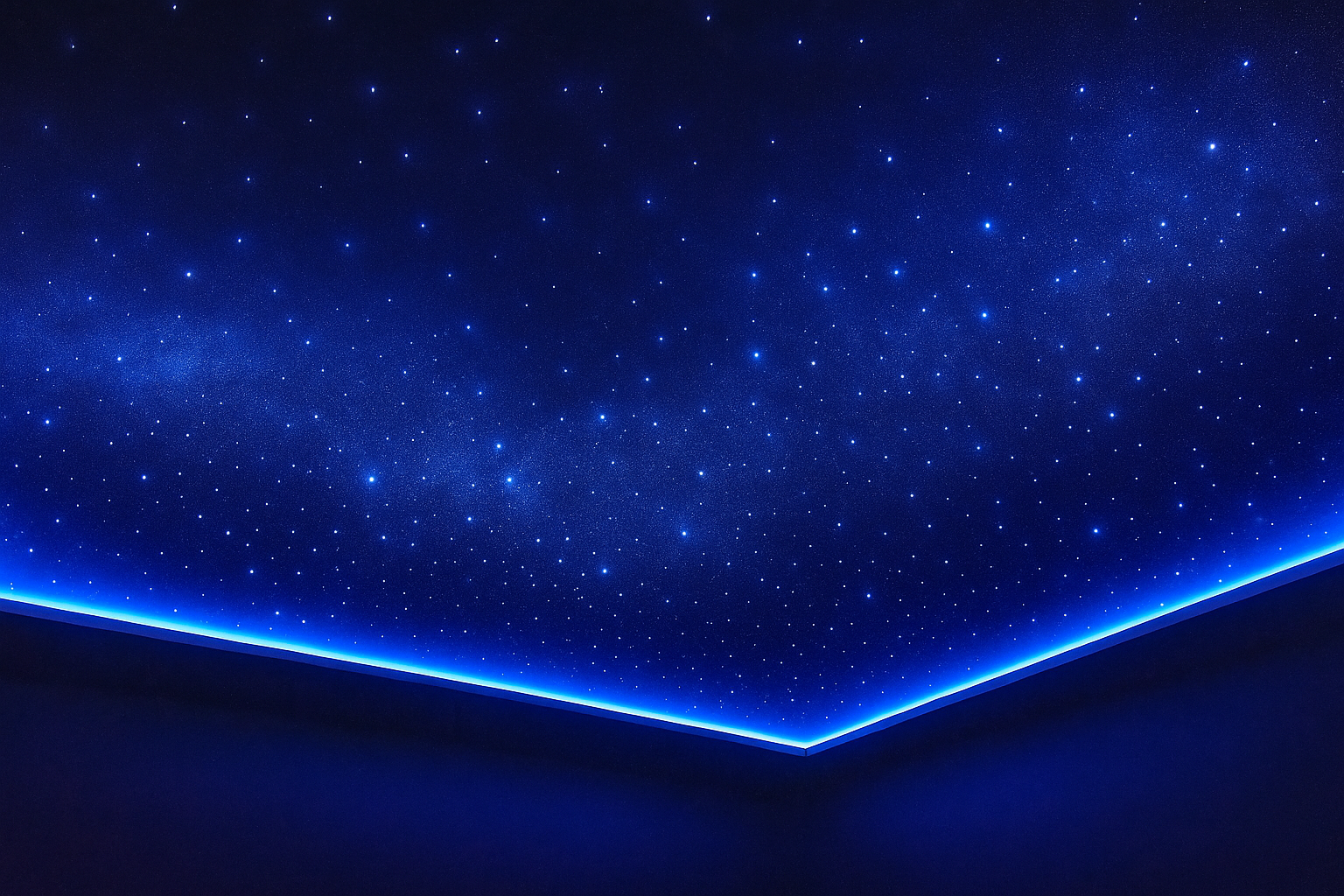
This trend is going viral; tiny LED dots are inserted in coloured gypsum boards to create a starry sky. It’s a favourite for kids’ rooms and bedrooms, offering a peaceful, relaxing ambience.
Industry-Backed Facts About Gypsum Ceilings
Recent construction and housing trend reports from India’s Building Materials Association, industry white papers, and National Building Code references highlight the steady rise in modern ceiling installations across Indian homes. These insights show that gypsum has become one of the top-used materials for false ceilings because it installs quickly, supports layered LED lighting, and contains up to 20% chemically combined water, which naturally improves fire resistance. According to multiple urban housing trend surveys, over 70% of new apartments now include some form of false ceiling, with gypsum preferred for its acoustic performance and clean, factory-finished look. The demand for moisture-resistant gypsum boards is also rising, especially in kitchens and bathrooms located in humid or coastal regions.
Gypsum is a fireproof, naturally occurring mineral that has water molecules in it, thus making it less prone to catch fire.
Gypsum has a clean finish with very few joints and is easy to install compared to POP.
Since Gypsum provides the highest level of thermal insulation, it performs best during the Indian summer months.
Since Gypsum is lightweight, Gypsum ceilings are safer on larger span areas.
The advantages and disadvantages of Gypsum
Advantages of Gypsum:
IT is quick to install.
Ensures a clean finish with nearly no or minimum joints.
A fire-resistant product.
Works with recessed and basic LED lighting configurations.
It is highly durable.
Disadvantages of Gypsum:
Would require the use of special boards, i.e., moisture-resistant boards for moisture-prone areas
Professional installation is required
If good-quality metal framing is not used, it will sag over the years.
Key Points Before Installing a Gypsum Ceiling
Use only reputable board and framing brands.
Ensure wiring, lighting, and fan points are planned before installation.
Check ceiling height; gypsum lowers it slightly.
Use moisture-resistant boards for kitchens.
Plan inspection cut-outs for future electrical work.
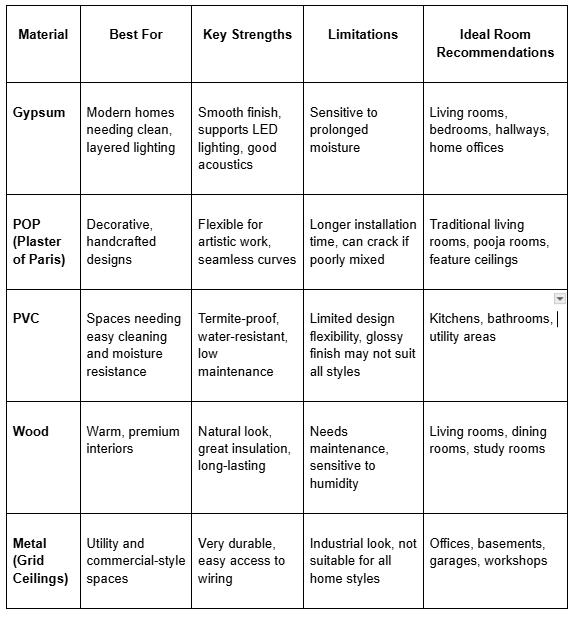
Compare Materials to Choose the Right Option for Each Space
Types of Gypsum Boards Used in Indian Homes
Gypsum boards used in gypsum board ceiling installations come in different variants depending on the room’s needs.
Standard Board
This is the most common option for living rooms and bedrooms. This board provides a smooth finish, is lightweight, and pairs really well with LED lighting setups.
Moisture-Resistant Board
This is ideal for kitchens and utility areas. It resists humidity and prevents fungal growth, making it a safer option for long-term use.
Fire-Resistant Board
This is ideal for areas where extra safety is needed, such as commercial spaces or homes with heavy electrical wiring. Its core contains glass fibres that slow fire spread.
Soundproof Board
These boards have higher density and are great for media rooms or bedrooms where noise reduction is essential.
Gypsum Ceiling Designs for Different Rooms
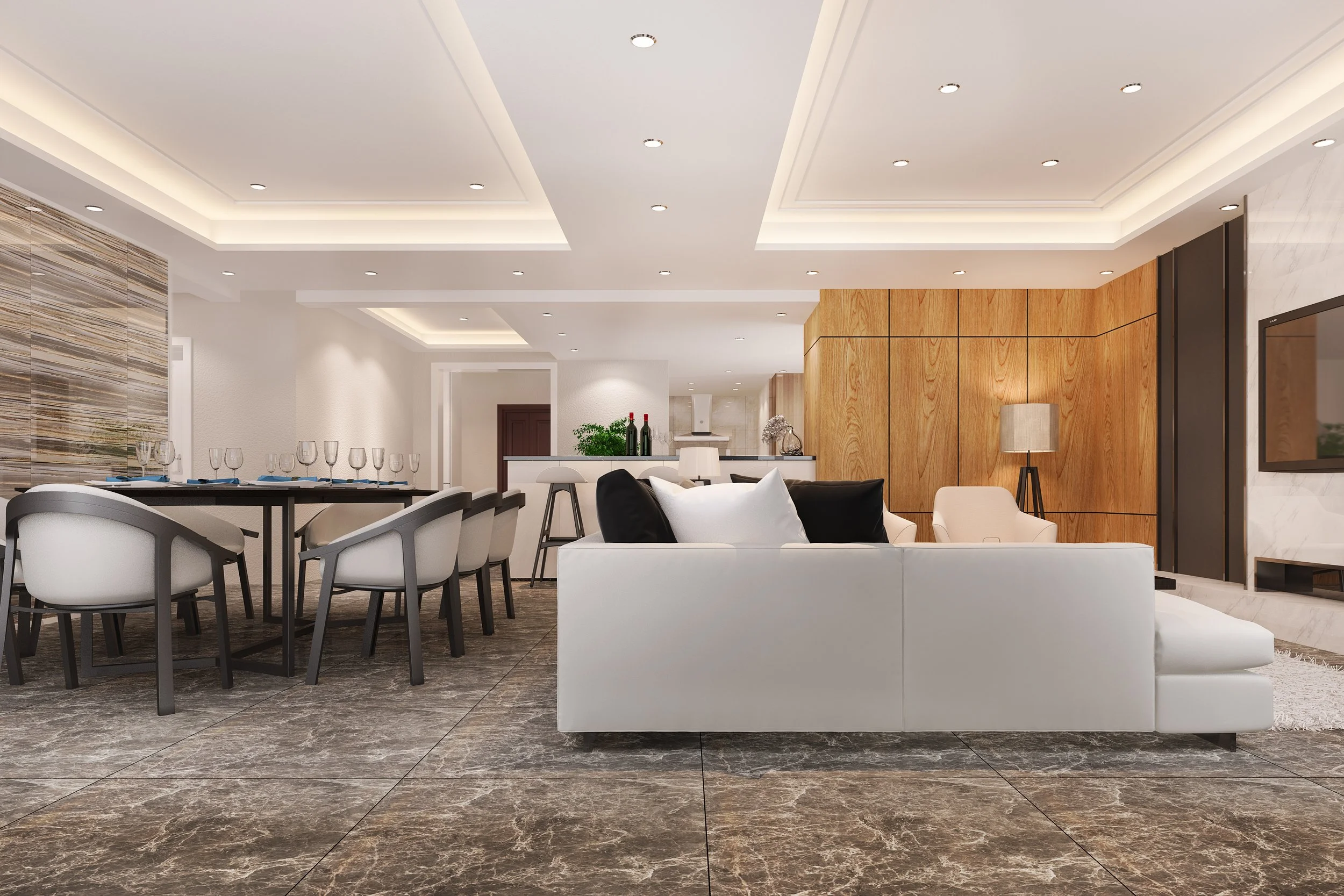
Living Room
Multi-layer tray ceilings
Curved ceilings with cove lighting
Wooden-accented biophilic ceilings
Geometric layouts with spotlights
Bedroom
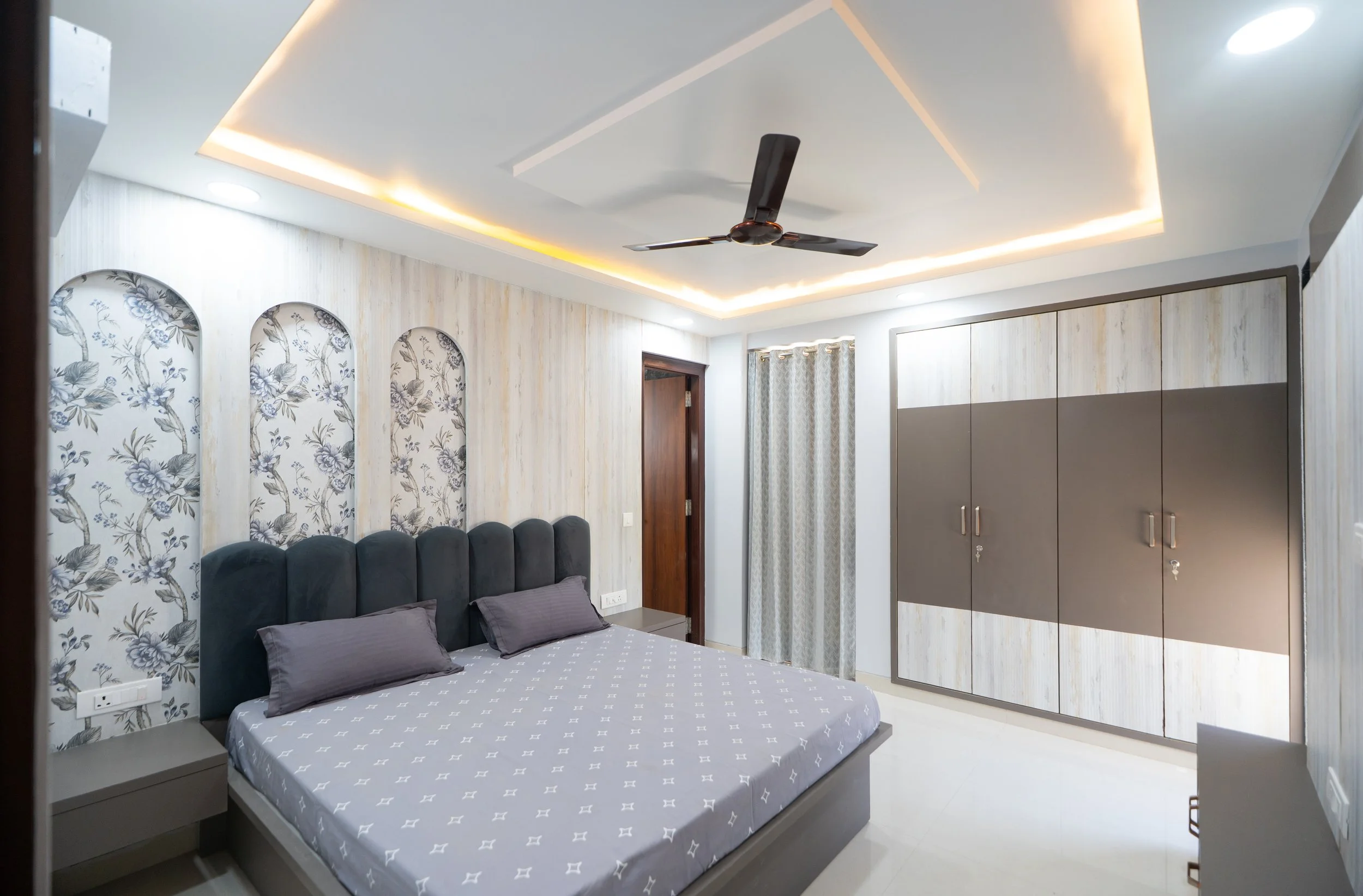
Single-layer minimalist styles
Night sky LED ceilings
Soft cove lighting panels
Curved edges for a calming look
Kitchen

Moisture-resistant gypsum board false ceiling
Linear lighting channels
Clean, functional layouts with ventilation gaps
Related Blog: 10 Best Modern Kitchen Cabinet Designs for Your Home
Gypsum vs POP vs Wood vs PVC
Gypsum offers clean finishes and faster installation.
POP is cheaper but slower to install and less uniform.
Wood adds warmth but needs maintenance in humid regions.
PVC is durable for bathrooms but not ideal for main rooms.
How to Maintain Gypsum Ceilings
Dust the surface regularly every few weeks.
Monitor for moisture or leaks during monsoons.
Avoid harsh cleaning chemicals.
Inspect LED fittings periodically.
Conclusion
Choosing the right Gypsum False Ceiling design can completely transform your space when installed thoughtfully. If you want expert guidance and reliable workmanship, Amenify can help you plan and execute the perfect ceiling for your home.
FAQs
-
Yes, given the use of proper installation and annual care, you can expect it to last many years. Amenify also believes that using good-quality framing provides long-term durability.
-
Yes, but the mounting must be fixed to the main ceiling, not the gypsum board.
-
It depends on the design complexity, board type, and installation method.
-
Yes, if you use moisture-resistant boards and proper ventilation.
-
Amenify India is an award winning best interior designers company offering luxury smart interiors for home and commercial spaces backed by patented 3D Virtual Reality technology to turn your vision into reality. Get 20% off today on your next interior project, call us at +919873123716 .
