
11 Practical Tips for Mandir Direction in Home
Have you been wondering whether your mandir is placed in the right direction? Maybe someone told you the northeast is ideal. Maybe you recently shifted homes, and now you are confused. What if it affects peace, prosperity, or positivity in the house?
Many Indian homeowners worry about the correct mandir direction in home because a pooja space is not just another corner. It is emotional. It is spiritual. It is deeply personal.
Key Takeaways
Northeast is the most recommended best direction for mandir.
Face east or north while praying.
Avoid placing the mandir in bedrooms or near bathrooms.
Idols should not be placed directly on the floor.
Keep the space clean, clutter-free, and well-lit.
What is Mandir Direction in Home as per Vastu?
Vastu Shastra is an ancient Indian architectural science. It focuses on how directions affect energy flow in a house. According to Vastu principles, each direction represents an element: water, fire, air, earth, and space.
The Ishan corner, or Northeast, has water and spiritual energy within it. That is why it is considered the most powerful temple direction in home.
In simple words, when your mandir is placed correctly, it aligns with natural energy flow. This improves mental peace and focus during prayer.
Why is Mandir Direction in Home Important?
Many people ask this directly. The location of the Mandir must be appropriate to ensure the following:
Positive energy flows freely through your home.
Helps to concentrate while praying.
Balance out your emotions.
To develop a peaceful space.
1. Place the Mandir in the Northeast Corner
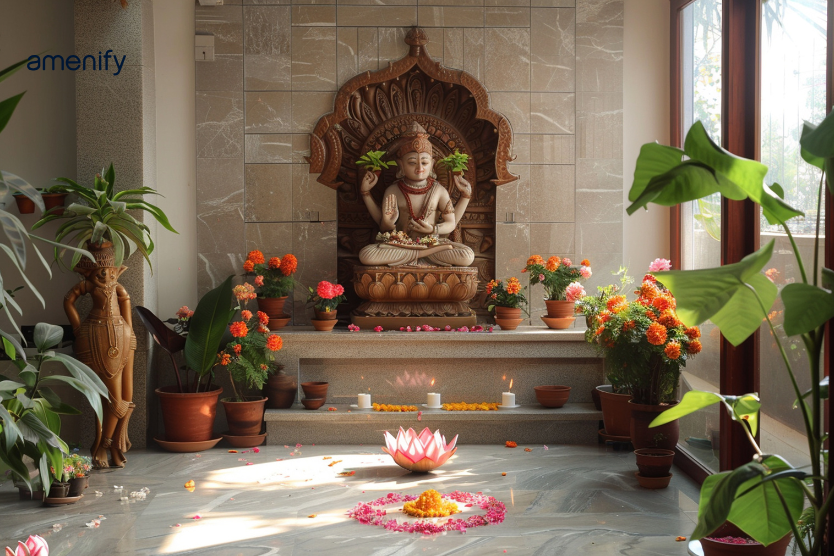
This is considered the ideal and best direction for mandir. The northeast attracts spiritual vibrations and calm energy.
If your house layout allows it, choose this direction first. Even in small flats, a wall-mounted mandir in the northeast works well.
2. East or North are Good Alternatives
What if the northeast is not accessible to you? Do not panic.
The east corner supports growth and clarity. North supports prosperity and calmness. Both are suitable options for temple direction in home when the northeast is not feasible.
In apartments, sometimes structural limitations exist. In such cases, choose the closest possible direction.
3. Avoid the South Direction
South is not generally consistent with achieving success through the placement of the mandir, or indian temple, in Vastu, due to the heavier energy zone located south of the Mandir.
If your current setup is in the south, consult an expert before making drastic changes. Small adjustments often solve the issue.
4. Face East or North While Praying
Your sitting position matters.
The ideal mandir face direction in home means you should face east or north during prayer. This allows positive solar and magnetic energy to support focus and devotion.
Keep this simple rule in mind whenever arranging idols.
5. Position Idols at the Right Height
Idols should not be placed directly on the floor. Use a raised platform.
They should ideally be at chest level when you are seated. This improves eye alignment and devotional posture.
Also, avoid placing idols too high above eye level.
6. Do Not Place Mandir in the Bedroom
This is a common mistake in modern flats.
The bedroom is meant for rest. Mixing sleep energy with spiritual energy is not recommended. If space is tight, use a separate corner with a proper partition.
Avoid placing the mandir on a wall that is directly shared with a bathroom.
7. Ground Floor Placement is Ideal
In duplex homes, place the mandir on the ground floor.
Avoid basements because they lack natural light. Also, ensure that there is no toilet directly above the mandir space.
Related Blog: 10 Marble Pooja Room Designs to WOW Your Home
8. Lighting Lamps in the Southeast Area
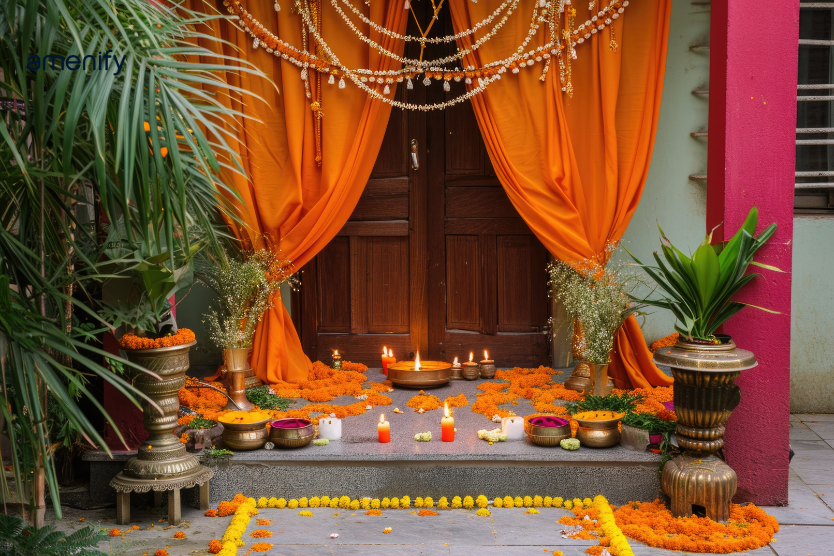
The southeast section corresponds to the fire element. Ideally, this is where you would place diyas and lamps on your altar.
Placing these items in the southeast corner of the altar balances out the elements contained in the pooja room.
9. Choose Light and Soothing Colours
Colour impacts energy. Avoid dark red, black, or very bold shades in the mandir area. Light colours enhance calmness and focus.
Stick with neutral colour schemes using:
- White
- Cream
- Light yellow
- Soft (faded) pastels
10. Maintain Cleanliness and Neatness
Cleanliness is not an option; you must clean! According to home experts, it's important to keep the pooja area free of clutter. Clutter blocks positive energy from flowing freely.
Remove:
Broken idols
Torn pictures
Old flowers
Unused items
11. Avoid Directly Facing the Main Door
The mandir should not be directly aligned with the entrance door.
This affects privacy and may disturb the spiritual environment. If unavoidable, use a partition or decorative screen.
How to Check the Correct Mandir Direction in Home?
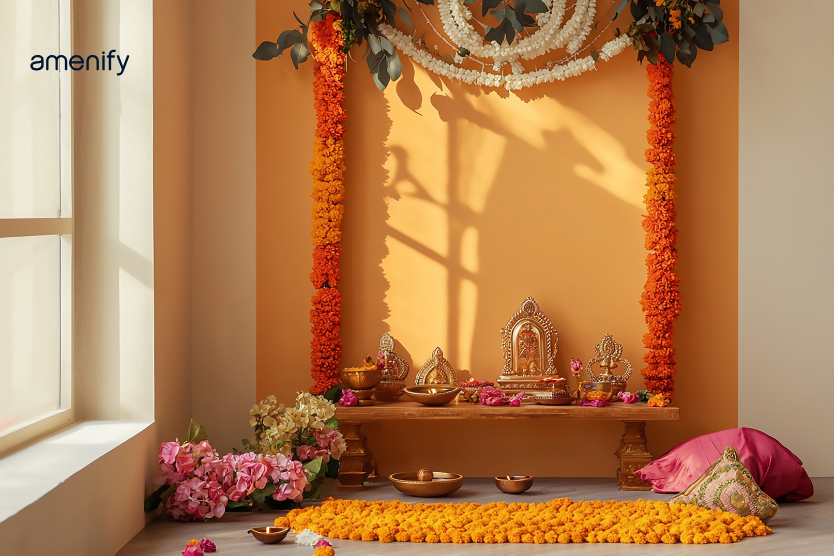
This simple process helps you determine the correct mandir direction in home without confusion. Follow these simple steps:
Stand in the center of your house.
Use a compass to identify directions.
Mark the northeast zone.
Check wall availability.
Choose a stable, clean corner.
Dos and Don’ts for Mandir Placement
Dos:
Keep the space well-lit.
Use wooden or marble platforms.
Face east or north while praying.
Keep symmetry in idol placement.
Don’ts:
Avoid placing the mandir under the staircase.
Do not place idols directly on the floor.
Avoid dark, damp areas.
Do not store unrelated items in the mandir.
Common Mistakes People Make
These small mistakes can disturb balance. Always think practically.
Placing the mandir next to the bathroom walls.
Keeping too many idols in one small space.
Ignoring ventilation.
Installing oversized temples in compact flats.
Mandir Direction in Flats vs Independent Houses
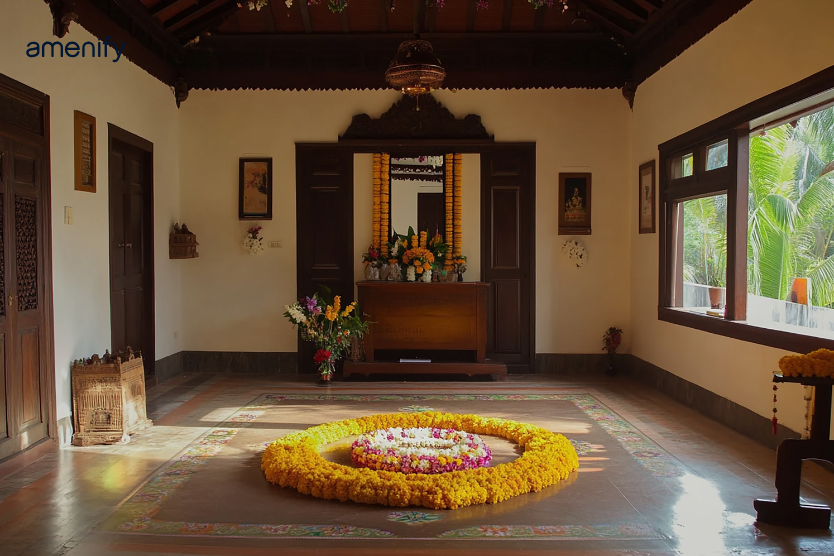
In independent homes, you have more flexibility. Northeast rooms can be fully converted into pooja rooms.
In flats, space is limited. A compact unit following the correct temple direction in home principles works perfectly.
Wall-mounted mandirs are practical and space-saving.
Benefits of Correct Mandir Placement
When the mandir direction in home is aligned properly, you may notice:
Better mental clarity
Reduced stress
More peaceful atmosphere
Improved spiritual focus
Conclusion
Your mandir is the heart of your home. It is where you pause. Where you breathe. Where you connect. The right mandir direction in home is not about superstition. It is about alignment, balance, and calmness. Even if your current placement is not perfect, small corrections can make a difference. Keep it clean. Keep it peaceful. Keep it intentional.
Amenify can assist you with interior design as well as Vastu Shastra if you require assistance creating your interior space.
FAQs
-
Northeast is considered the best direction for mandir according to Vastu.
-
Idols should ideally face west or south so that the person praying faces east or north.
-
If space is limited, it's best to try not to have the mandir near the stove or sink; however, this is not ideal.
-
South is generally not recommended for mandir direction in home.
-
Yes. Even small apartments can follow proper mandir face direction in home guidelines.
-
Amenify provides many in-home services. Sign up to get $50 off on your first home service or product.
