
WPC Wall Panel: The Ultimate Guide for Homes & Offices 2026
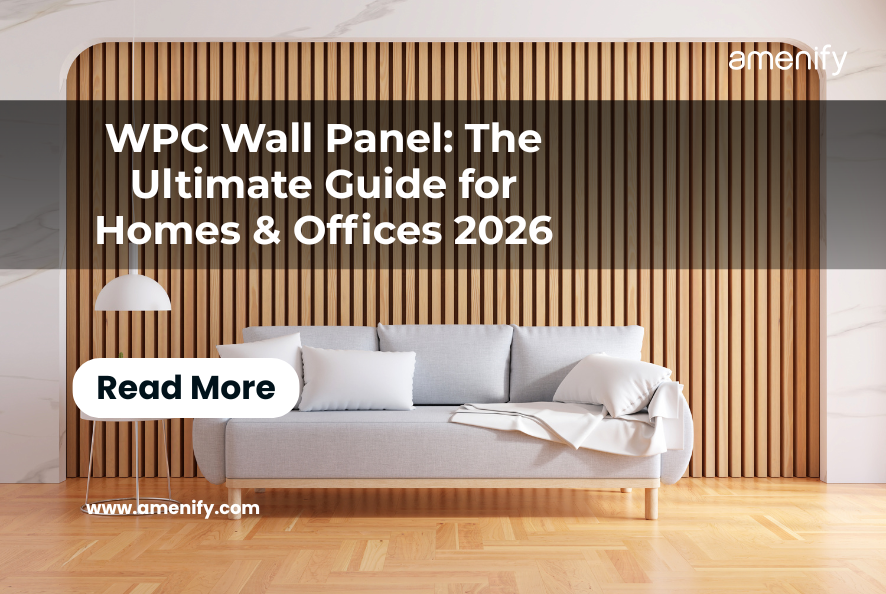
Fluted WPC wall panel in walnut finish used as a living room feature wall
What is the most common issue Indian homeowners face?
Peeling paint, wall leakage, warping, termite damage, and fading caused by harsh summer heat are among the most common problems in Indian homes. Even after regular repairs and repainting, these issues often return. That's where WPC wall panels come in. This durable, low-maintenance material is transforming modern interior and exterior design across India and beyond.
Whether you're renovating a 2BHK apartment, designing a corporate office, or creating a resort-style balcony, this guide covers everything you need to know about WPC wall panels, from materials and benefits to design trends, colours, costs, installation, and maintenance.
What Is a WPC Wall Panel?
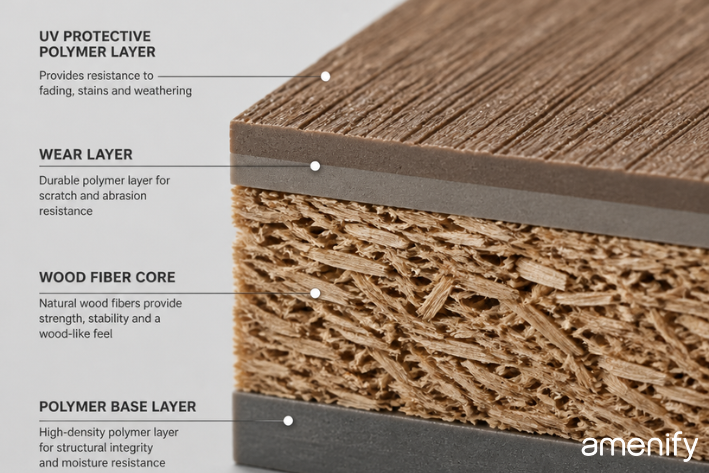
Cross-section diagram showing wood fiber and polymer composition of a WPC wall panel
WPC stands for Wood Plastic Composite; as the name suggests, it is a precisely engineered blend of natural wood fibers and recycled plastic polymers.
The resultant material is such that it captures the warmth and visual texture of real timber while completely eliminating its biggest weaknesses: moisture absorption, termite vulnerability, warping, and the need for periodic polishing or sanding.
Unlike ordinary PVC sheets, which look like plastic or MDF panels, which absorb water and swell, WPC strikes the sweet spot: premium wood-like aesthetics with industrial-grade durability.
The composite is typically made through a process called co-extrusion, where wood fibers and polymer resins are combined under high heat and pressure, then shaped into panels using precision molds. A UV-resistant cap layer is applied on top to protect colour and texture over years of use.
Why WPC Wall Panels Are Booming in 2026
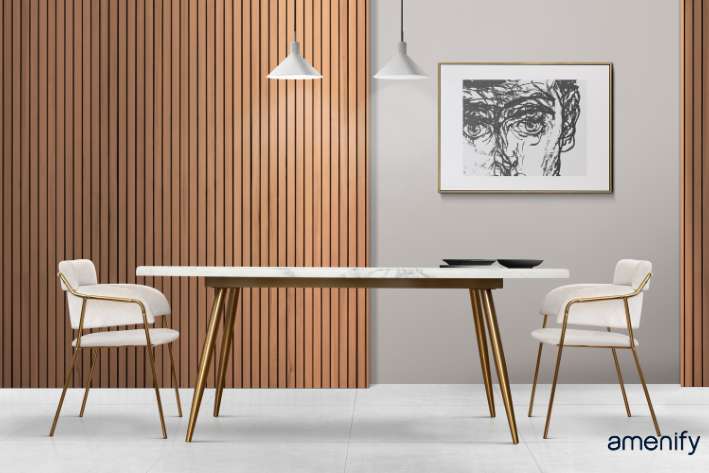
WPC panel in living room, used to create a contemporary aesthetic
The global WPC wall panel projected market value is over $10 billion. This has happened due to the durability, flexibility, and aesthetics that WPC panels bring to the table. Other than that the following factors are responsible for the boom:
Zero Maintenance and High Durability: WPC panels offer a fast, clean, and visually impactful upgrade that contractors and homeowners both appreciate. From Mumbai's monsoon humidity to Delhi's summer extremes, traditional wall materials constantly lose the battle. WPC, with its 100% waterproof core and UV-stable surface, is built for precisely these conditions.
Sustainability mandates: Premium WPC panels incorporate recycled plastic and wood fibre, reducing deforestation pressure and plastic waste.
Design-conscious consumers: The rise of social media and home design platforms has made homeowners more aesthetically ambitious. WPC panels deliver the high-end, textured, magazine-worthy look that paint simply cannot.
Key Advantages of WPC Wall Panels

WPC wall panels are beautiful, waterproof, durable and pest resistant.
Let's have a look at the key factors why consumers prefer WPC wall panels.
1. Completely Waterproof
WPC panels do not absorb moisture. This makes them ideal for bathrooms, kitchens, basements, and coastal homes where humidity is constant. Unlike paint that bubbles or wood that swells, WPC stays dimensionally stable year-round.
2. Termite and Pest Proof
The polymer content in WPC makes it biologically unappealing to termites, borers, and other wood-destroying insects. This is a particularly significant benefit in India's tropical climate.
3. Exceptional Durability
High-quality WPC wall panels are designed to last 15 to 25 years under normal conditions. Compare this to MDF (5–10 years) or wallpaper (3–7 years before it needs replacement), and the cost-per-year math strongly favours WPC.
4. Fire-Resistant Options
Many WPC panel products are available with fire-retardant additives that meet building safety standards, which are important for commercial, hospitality, and public building applications.
5. Low Maintenance
No sanding, polishing, painting, or varnishing ever. The colour and texture are embedded in the composite and the protective cap layer. A damp cloth and mild soap are all that's needed.
6. Fast Installation
WPC panels typically feature tongue-and-groove or click-lock interlocking systems that reduce installation time by up to 50% compared to traditional wall finishing methods. No wet work, no curing time, no mess.
7. Eco-Friendly Composition
Most premium WPC panels use recycled wood fibres and recycled plastic, diverting waste from landfills while producing a high-performance product.
8. Acoustic Benefits
Dense WPC panels naturally absorb and dampen sound, reducing echo in rooms. An added benefit for bedrooms, home offices, and conference rooms.
WPC vs MDF vs PVC vs Natural Wood: Which Should You Choose?
Given below is a table that shows a comparison between WPC, MDF, PVC, and natural wood on the basis of moisture resistance, termite resistance, lifespan in general, and maintenance. In case you have a confusion as to which of the WPC, MDF, and PVC to choose, this comparison table will make it easy for you.
| Feature | WPC | MDF | PVC | Natural Wood |
|---|---|---|---|---|
| Moisture Resistance | Excellent | Poor (swells) | Good | Poor |
| Termite Resistance | Excellent | Poor | Excellent | Poor |
| Lifespan | 15–25 years | 5–10 years | 8–12 years | 10–20 years (with maintenance) |
| Maintenance | Very Low | High | Low | Very High |
| Design Options | Extensive (3D, textured, backlit) | Limited | Limited | Natural only |
| Fire Resistance | Good (FR variants available) | Moderate | Moderate | Poor |
| Eco-Friendliness | High (recycled content) | Moderate | Moderate | Depends on source |
| Cost | Moderate | Low | Moderate | High |
For Indian homes and offices dealing with humidity, heat, and the desire for premium aesthetics without premium maintenance costs, WPC is the clear frontrunner.
Popular WPC Wall Panel Design Ideas for 2026
Here is how you can elevate your spaces using WPC panels.
1. Fluted Feature Wall (Living Room)
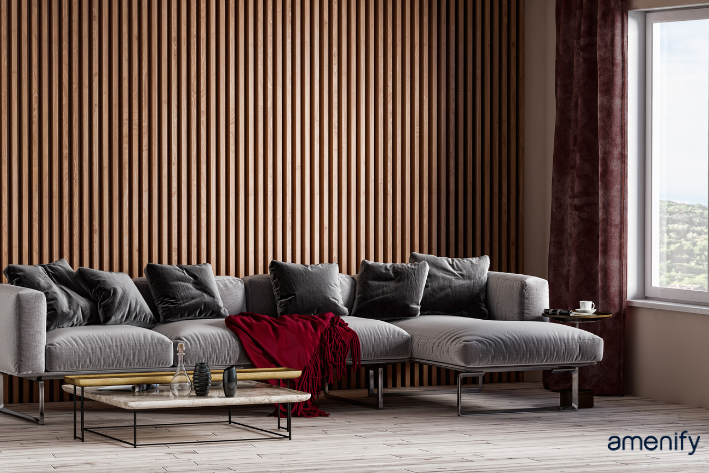
WPC panels in living room.
The single biggest design trend of 2026. Vertical or horizontal grooves in WPC panels create rhythm, depth, and a sense of architectural sophistication. A fluted WPC feature wall transforms an ordinary living room into a curated interior.
Design Tip: You can pair with warm-toned panels in walnut or teak for a luxury feel.
2. Floor-to-Ceiling Bedroom Headboard
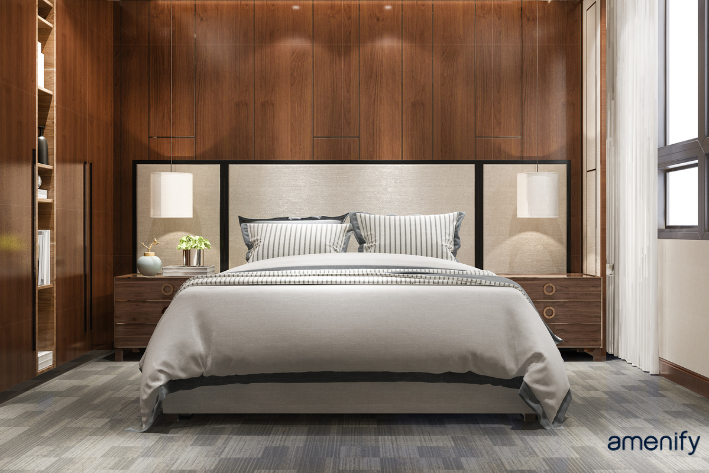
Heavy wooden headboards with WPC panels running floor-to-ceiling behind bed
You can replace heavy wooden headboards with WPC panels running floor-to-ceiling behind your bed. When LED strip lighting is fitted into the grooves to give hotel-suite elegance at a fraction of the cost.
Design Tip: Soft textures in light ash or birch work beautifully here.
3. TV Unit and Entertainment Wall Backdrop
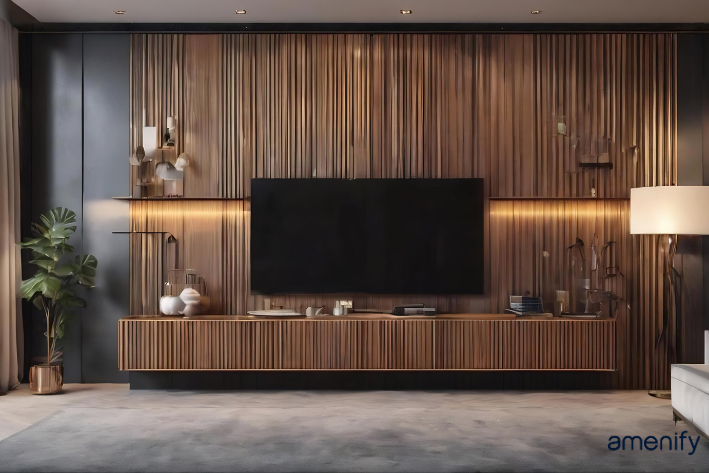
WPC panels for TV unit
WPC panels are the perfect material to frame a large TV. They provide a matte or wood-grain surface that absorbs rather than reflects light. They have enough thermal stability to withstand extended screen use and cleverly conceal wiring behind the panel surface.
4. 3D WPC Feature Walls
Geometric patterns, wave reliefs, and ribbed designs give interiors a dynamic, contemporary edge. The 3D WPC panels are particularly used in hotel lobbies, office receptions, and high-end residential entrance halls where visual impact is the priority.
5. Backlit WPC Panels
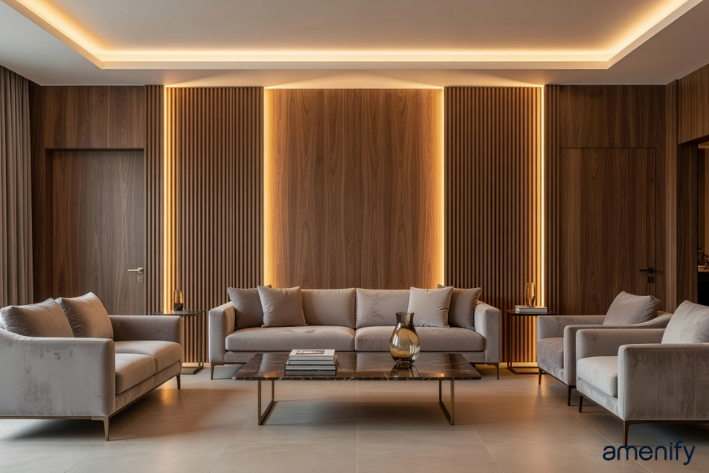
Backlit WPC panels add warmth, depth, and ambient lighting to modern living spaces.
Trending in upscale homes, bars, lounges, and corporate environments. LED-integrated WPC panels where light diffuses through laser-cut or slatted sections add a bright, elegant effect.
6. Ceiling Rafters and Highlights
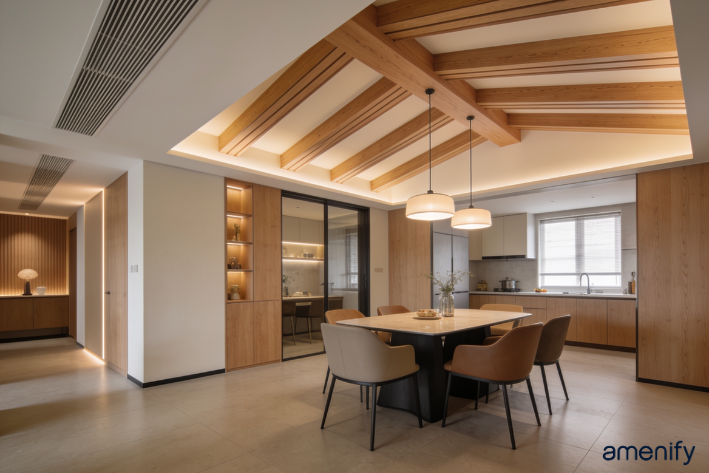
WPC ceiling rafters add warmth and architectural character while creating a premium wood-beam look.
WPC panels are no longer confined to walls. Light-colored WPC used on ceilings to create a "false rafter" look adds warmth to dining areas and living rooms, creating an intimate, inviting atmosphere without a traditional false ceiling structure.
7. Balcony and Terrace Cladding
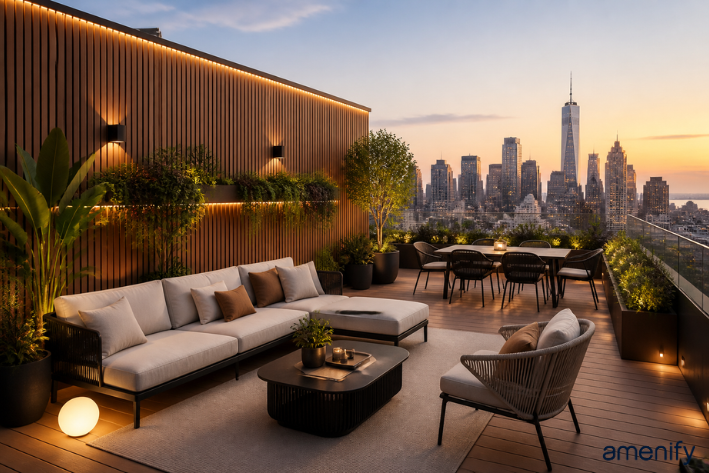
Since WPC is 100% waterproof and UV-resistant, it's the ideal choice for exterior applications. Horizontal cladding on balcony walls protects the walls from the Indian monsoons and summer heat without fading, cracking, or requiring refinishing, giving outdoor spaces a permanent resort aesthetic.
8. Main Entrance Facade
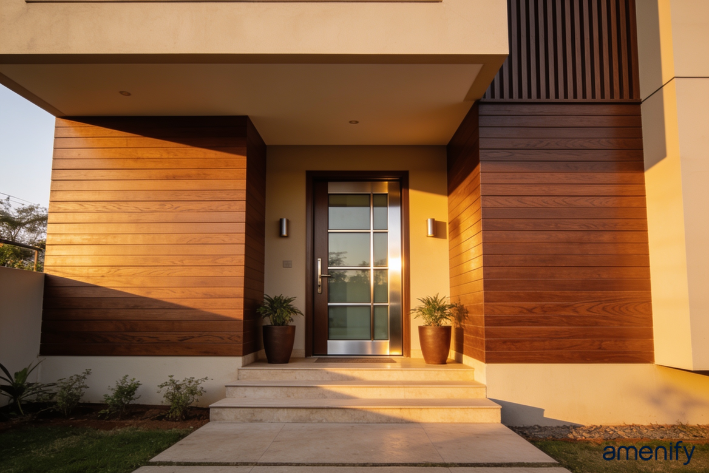
Dark-toned WPC panels create a striking entrance facade that enhances curb appeal without the upkeep of natural wood.
Installing dark-toned WPC panels flanking a main entrance door creates a premium and contemporary aesthetic. They require zero polishing or varnishing over the years, so the home's exterior always looks sharp.
9. Office Reception Walls
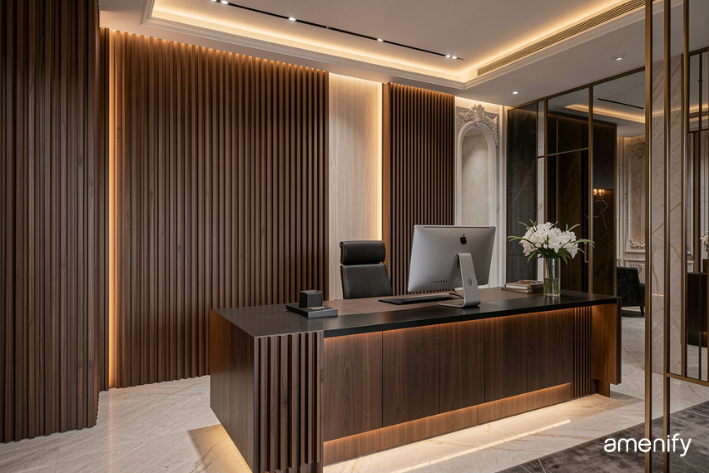
Fluted and backlit WPC panels help create a memorable first impression in modern office reception areas.
Fluted or backlit WPC panels in a corporate reception area deliver a strong first impression for clients. They communicate quality, modernity, and attention to detail all before a word is spoken.
10. Acoustic Conference Room Panels
Sound-absorbing WPC panels in conference rooms and boardrooms reduce echo while adding visual polish. They combine functional performance with a professional aesthetic that clients and colleagues notice.
WPC Wall Panel Colors Trending in 2026
Color choice is arguably the single most impactful decision in any panel project. Here is how you can choose your panel, along with the list of colours dominating both residential and commercial projects globally right now:
Natural Oak: This is a no-brainer best-seller. Warm, inviting, and universally versatile, Oak works with both modern and traditional interiors. It accounts for approximately 20–25% of global WPC demand in 2026.
Walnut Brown: Rich, deep tones with strong visual grain. This colour is widely used in boutique hotels, executive offices, and luxury villas. Particularly famous across North America and Europe.
Light Ash Gray: This colour has picked up recently. This is used to create a minimalist, Scandinavian-inspired interior. Along with brightening spaces, it pairs cleanly with contemporary furniture. Often favoured by younger homeowners and commercial developers.
Charcoal Black: Bold, sophisticated, and increasingly specified in premium commercial projects. Designers pair it with brass or gold metal trims and integrated LED lighting for maximum visual drama.
White Oak: A luxury minimalist choice. Creates a bright, airy feeling ideal for high-end apartments, show homes, and designer showrooms.
Teak Wood Finish: The natural choice for tropical and coastal settings. Warm, exotic, and deeply familiar teak-inspired WPC performs especially well in Southeast Asia, the Middle East, and coastal Indian properties.
Marble-Effect Panels: Not a solid colour but a pattern category experiencing explosive growth. White Carrara, Calacatta Gold, and Grey Marble finishes deliver a high-end stone look at a fraction of the cost and weight of actual marble cladding.
WPC Wall Panel Applications by Space
Residential Spaces: Living room accent walls, TV units, bedrooms, kitchens, and bathrooms.
Hotels & Resorts: Lobbies, guest rooms, corridors, restaurants, and conference spaces.
Commercial Offices: Reception areas, meeting rooms, executive cabins, and breakout zones.
Retail Stores & Malls: Storefronts, display walls, checkout areas, and common corridors.
Educational & Healthcare Facilities: Waiting areas, hallways, classrooms, clinics, and consultation rooms.
How to Choose the Right WPC Wall Panel
Not all WPC panels are equal. Here's what to check before purchasing:
Density and Thickness: You need to pick the density and thickness based on the site; say, if you are installing for a kids' room, it will be thicker (18 mm or more). And for the decorative interior feature walls, it can be thinner.
Interlocking System: Make sure to get panels with a seamless tongue-and-groove system that looks professional instead of panels with visible fixing points.
UV Stability: Look for the UV-stability panels if you are looking for a panel outdoors or on a balcony.
Fire Rating: For commercial, hospitality, and multi-story residential projects, request fire-rating certificates confirming compliance with applicable building codes.
Surface Finish: Matte finishes hide fingerprints better in high-traffic areas. Glossy or satin finishes are better for lower-traffic accent walls.
Colour Consistency: Always check batch consistency if ordering large quantities; colour variation happens a lot with cheaper panels.
Warranty: Choose reputable WPC manufacturers that offer 10–15-year product warranties. Shorter warranties are a red flag.
Is WPC Wall Panel Installation Easy? Process, Timeline & What to Expect
WPC panel installation is significantly faster and cleaner than traditional plastering or tiling. Here's the general process:
Surface Preparation: The base wall should be flat, dry, and structurally sound. Minor imperfections can be levelled with a substrate board.
Framing: Aluminum or WPC battens are fixed to the wall to create a mounting framework. These also create a cavity for wiring or insulation behind the panels.
Panel Fixing: Panels click or lock into the battens using the tongue-and-groove system. Most experienced installers can cover a standard living room wall in a single day.
Trim and Finishing: Matching corner trims, end caps, and skirting complete the installation for a seamless architectural look.
No Curing Time: Unlike paint, plaster, or adhesive tiling, WPC panels can be enjoyed immediately after installation.
Pro tip from interior designers: Use a tongue-and-groove interlocking system that hides screws and joints; it creates a sleek, uninterrupted architectural finish that elevates the entire room.
How Much Maintenance Do WPC Wall Panels Require?
One of the most compelling reasons to choose WPC is how little it asks of you once installed.
Daily care: Light dusting with a soft, dry cloth is sufficient for most days.
Periodic cleaning: Wipe with a damp microfibre cloth. For tougher stains, a mild soap-and-water solution works perfectly.
What to avoid: Never use harsh acidic cleaners, bleach, or solvent-based products. These can damage the protective cap layer and dull the surface finish.
No refinishing required: Unlike wood, WPC never needs sanding, oiling, polishing, or repainting. The colour is integrated into the composite.
Insect protection: Zero action required. WPC is naturally unappealing to termites, borers, and other wood-destroying pests.
Final Thoughts
WPC wall panels have become a practical choice for modern homes and commercial spaces, combining the appearance of wood with greater durability and lower maintenance. Their resistance to moisture, termites, fading, and everyday wear makes them suitable for everything from feature walls and office interiors to balconies and hospitality spaces. With a wide range of colours, textures, and finishes available, WPC panels offer the flexibility to achieve both functional and aesthetic goals, making them a smart long-term investment for anyone looking to upgrade their space.
How Can 3D Spaces Help?
Whether you're designing a feature wall for your home, upgrading an office reception area, or planning a complete interior makeover, choosing the right WPC wall panel involves more than selecting a colour or texture. Factors such as space planning, lighting, panel placement, and finish selection all influence the final result.
At 3D Spaces by Amenify India, we help homeowners and businesses visualize their spaces before execution through immersive 3D walkthroughs, AI-powered design recommendations, and expert material guidance. Our team works with you to select finishes that complement your style, budget, and functional requirements, ensuring every wall contributes to a cohesive design story.
From concept development to project execution, we help transform ideas into spaces that are both practical and visually impactful.
FAQS
-
A WPC (Wood Plastic Composite) wall panel is a cladding material made from a blend of natural wood fibres and recycled plastic polymers. It looks like wood but with significantly better durability, moisture resistance, and lower maintenance requirements.
-
Yes, WPC panels are specifically well-suited to India's diverse climate. The reason being they are 100% waterproof and UV-resistant along with being termite-proof, making them ideal for India.
-
High-quality WPC panels are designed to last between 15 and 25 years under normal conditions.
-
Yes, WPC panels last 15 to 25 years, which is significantly better than alternatives like MDF (5-10 years) or wallpaper (3-7 years).
-
Yes. WPC panels with UV-stable cap layers and weather-resistant formulations are designed for outdoor use. Perfect for balconies, terraces, and facades. Pro-Tip: Always ask for UV and weather-resistance ratings before buying panels in exterior applications.
-
The method is called the tongue-and-groove click-lock system fixed to aluminum or WPC battens on the wall. Professionals often get the work done in 1 day for standard living room installations.
-
Yes, there are fire-retardant (FR) variants available. One can always ask for relevant fire-rating certificates for building code compliance.
-
You can clean the WPC panels with regular dusting and occasional wiping with a damp cloth and mild soap solution. It is advised to avoid bleach, acidic cleaners, and solvent-based products. No maintenance is ever required.
-
If repainting is desired, a plastic-compatible primer is required for the paint to adhere properly to the composite surface. Needless to say, WPC panels come pre-finished in a wide variety of colours and textures, eliminating the need for painting.
-
Yes, premium WPC panels are manufactured using recycled wood fibres and recycled plastic, which basically reduces both deforestation and reuses plastic waste. And since they have a long lifespan, it also reduces the frequency of replacement, further lowering environmental impact.
-
For wall cladding/coating specifically, WPC outperforms plywood on moisture resistance, termite resistance, maintenance requirements, and long-term durability. Plywood remains a better structural substrate material, but as a visible wall surface, WPC is far superior choice in most environments.
-
Absolutely. The waterproof nature of WPC makes it an excellent alternative to ceramic tiles or painted drywall in bathrooms and kitchen walls. The installation is faster as compared to ceramic tiles; it looks more premium and requires less grout maintenance.
