Stone Wall Cladding Guide: Types, Designs, Installation & Maintenance Tips 2026

Stone wall cladding designs for your home.
Stone wall cladding has become one of the most sought-after design choices for homeowners across all major cities. It has become famous because of its exquisite curb appeal and sturdiness.
It's good whether you want a sleek, modern look or a warm, rustic feel.
Stone wall cladding designs give you an almost limitless range of options to improve your home's character.
In this complete guide, we cover everything from what stone cladding is and the best design ideas to the full installation process, realistic price breakdowns, and common mistakes to avoid. If you're seriously considering stone cladding for your home, this is the only resource you need.
Table of Content
What Is Stone Wall Cladding?
What Are the Benefits of Stone Wall Cladding?
Natural Stone Cladding vs Simulated or Artificial Stone Wall Cladding
Stunning Stone Wall Cladding Ideas for Your Home
Types of Stone Used for Wall Cladding
Interior vs Exterior Stone Wall Cladding
How is stone wall cladding installed? (Step-by-Step)
What is the difference between wet and dry installation?
Stone Cladding vs Paint vs Tiles: Which is Right for You?
5 Common Stone Wall Cladding Mistakes to Avoid
How 3D Spaces by Amenify India Can Help You
Frequently Asked Questions
“Fluted stone panels and mixed-media feature walls combining stone with wood paneling or textured plaster are dominating Delhi NCR interior design projects. Darker stones like black slate and volcanic rock are particularly popular in luxury 3BHK and 4BHK apartments.”
What is stone wall cladding?
Stone cladding is the process of applying a thin decorative layer of natural or synthetic stone onto a wall surface.
This adds a layer that is aesthetically pleasing and provides the structure more protection. These modern stone wall cladding designs are far more affordable and easy to install.
The result is a three-dimensional wall with genuine depth, character, and warmth without the engineering overhead of building an entirely stone wall from scratch. The best part is it can be used on exterior as well as interior walls.
Homeowners have used stone wall cladding on the inside walls as well, especially TV unit backdrops and entrance lobbies.
Also Read: 10+ Stunning Wallpaper Design Ideas for Living Room to Transform Your Space
What Are the Benefits of Stone Wall Cladding?
Choosing stone wall cladding for your home comes with several advantages:
| Benefit | What It Means for You |
|---|---|
| Aesthetic Appeal | Instant texture, depth, and natural elegance on any wall. |
| Durability | Weatherproof and resistant to wear, scratches, and moisture. |
| Low Maintenance | A bi-annual clean with mild soap and water is usually all it needs. |
| Thermal Insulation | Keeps interiors cooler in Indian summers and warmer in winters. |
| Versatility | Available in dozens of finishes, colours, patterns, and stone types. |
| Resale Value | Homes with stone cladding consistently command higher resale prices. |
| Fire & Water Resistance | Natural stone is inherently resistant to both fire and water damage. |
Natural Stone Cladding vs Simulated or Artificial Stone Wall Cladding
Now, you know what "stone wall cladding" means; it's time to understand the comparison between natural stone cladding and artificial stone cladding.
Both types have real merits depending on your budget, wall location, and aesthetic goals.
| Factor | Natural Stone Cladding | Artificial / Simulated Stone |
|---|---|---|
| Source | Quarried from the earth | Made from concrete, resin, or composite materials |
| Appearance | Unique textures and patterns; no two pieces are identical | Designed to mimic the look of natural stone |
| Durability | Highly durable, eco-friendly, and can last 20+ years | Durable, but typically less long-lasting than natural stone |
| Weight | Heavier; may require a structural assessment | Lightweight and easier on walls |
| Cost (India) | ₹120–₹600/sq ft depending on the stone type | ₹65–₹200/sq ft typically |
| Installation | Requires skilled professional labour | Easier and quicker to install |
| Design Variety | Limited to naturally occurring colours and textures | Wide range of colours, patterns, and finishes available |
| Best For | Exterior walls, luxury interiors, and long-term investments | Budget renovations, rental properties, and feature walls |
3D Space's Advice: If you are planning for exterior elevation or high-moisture areas (bathrooms, near pools), you can opt for natural stone. For interior feature walls or TV backdrops, good-quality artificial stone cladding can be nearly indistinguishable and significantly more affordable.
Also read: WPC Wall Panel: Complete Design & Buying Guide 2026
Stunning Stone Wall Cladding Ideas for Your Home
Here are some of the most popular design styles our team installs across Delhi NCR homes, with practical insights on where each works best.
1. Rustic Interior Stone Wall Cladding
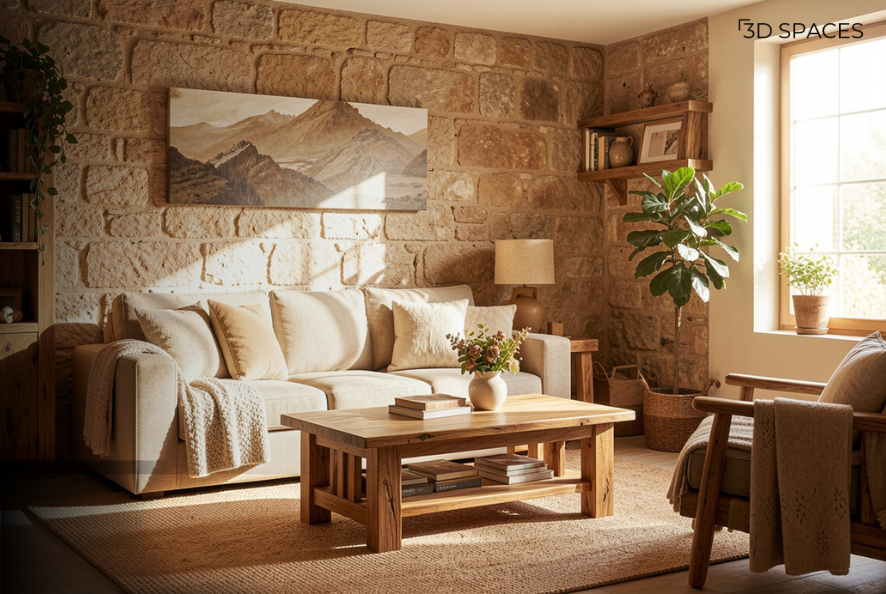
Rustic stone cladding uses uneven stones in warm, earthy tones, sandstone, rough slate, and reclaimed fieldstone are popular choices.
Rustic stone cladding uses uneven stones in warm, earthy tones; sandstone, rough slate, and reclaimed fieldstone are popular choices.
In the rustic interior stone wall cladding the irregular shapes and natural variation create a genuine, organic feel that is hard to replicate with any other material.
It is often paired with reclaimed wood furniture and antique-finish metal hardware for maximum effect.
Stone: Sandstone, rough slate
Style: Rustic / Farmhouse
2. Asymmetric Interior Stone Wall Cladding
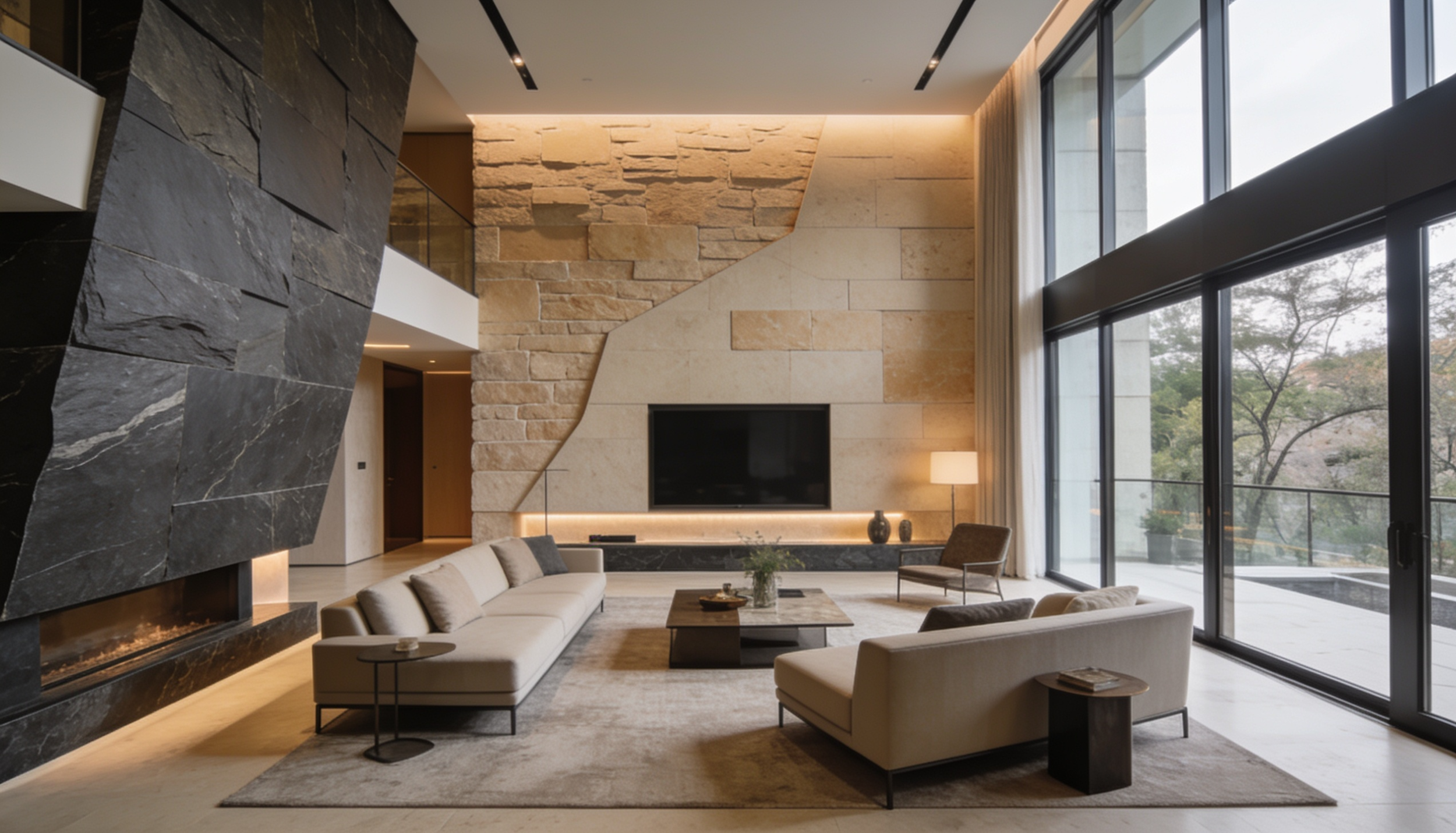
Asymmetric stone cladding design creates a dynamic feature wall with varied stone sizes and textures, bringing modern artistic flair to interiors.
For a contemporary twist, asymmetric stone cladding features stones in varying shapes, sizes, and orientations, placed in non-uniform, non-repeating patterns. This gives the wall a dynamic, artistic quality that draws the eye and creates a real conversation piece. It is often used around fireplaces and behind media units.
Best for: Accent walls, fireplace surrounds
Stone: Mixed slate, quartzite
Style: Contemporary / Eclectic
3. Black Interior Stone Wall Cladding
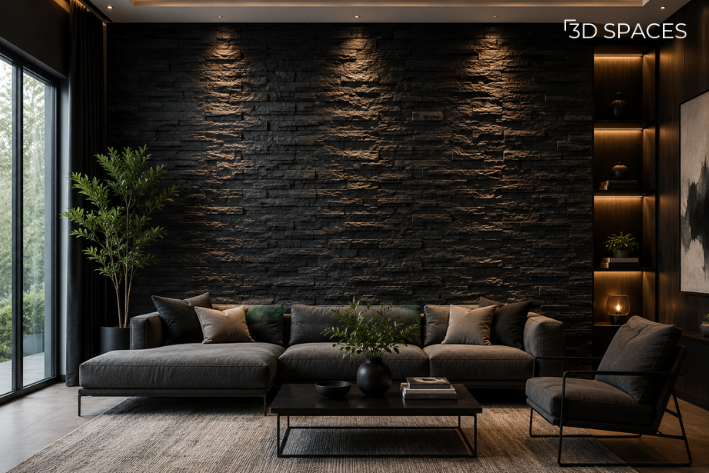
Bold black interior stone wall cladding delivers dramatic depth and a sleek, sophisticated vibe ideal for contemporary and luxury spaces.
Dark stone cladding, like black slate, basalt, or volcanic rock, creates an ultra-modern and luxurious interior. The deep, rich hues create a striking contrast with lighter shade furnishing.
This style of stone cladding is perfect for people who want to make a strong, stylish statement.
4. 3D Interior Stone Cladding
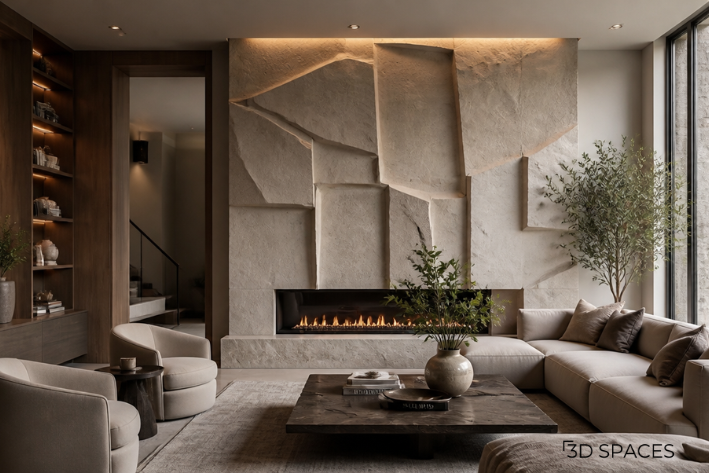
3D interior stone cladding adds captivating depth and tactile texture to walls, enhancing visual interest and ambient lighting effects.
3D stone cladding panels go beyond flat surfaces; sculpted relief patterns create a visual effect that moves throughout the day in tune with the natural and artificial light moving across the wall.
This style transforms ordinary walls into a genuine sensory experience and is particularly striking when paired with directional spotlights or cove lighting.
Best for: Entrance lobbies, living rooms
Stone: Sandstone panels, sculpted limestone
Style: Statement / Sculptural
5. White and Serene Interior Stone Wall Cladding
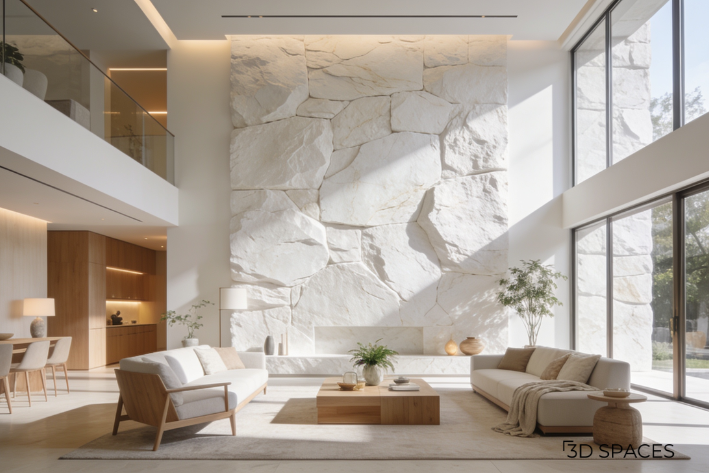
White and serene stone wall cladding brightens interiors with light, textured natural stones, perfect for clean, airy, and calming living spaces.
Light-colored stone: white limestone, cream-colored marble, or pale travertine transforms a room without being too much.
Here the natural texture adds depth while the neutral palette keeps the space calm and spacious.
It is often done to give a Scandinavian vibe to the places, famous around coastal areas, where light and simplicity are the main themes for homes.
Best for: Open-plan living areas, bedrooms
Stone: White limestone, cream marble
Style: Scandinavian / Coastal / Minimal
Types of Stone Used for Wall Cladding
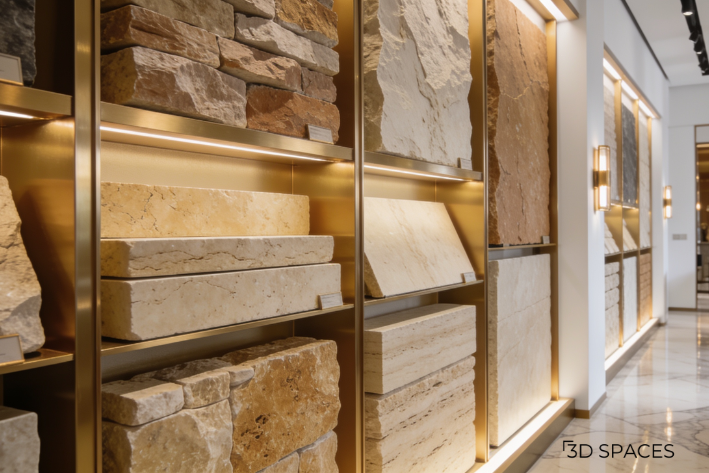
Different types of stones stacked in shop for sale
What are the stones being used, and which one should you go for?
You need to choose the right stone in order to understand three things: the price point, the best use, and the look and feel. Below is a quick review of all your options:
Slate
It is available in rich earthy tones, charcoal gray, black, and rusty orange. The natural cleft surface gives a bold rustic texture. Excellent for living rooms and feature walls. Most of the slates come from Rajasthan, and they offer great value.
Sandstone
It comes in a warm, earthy look that works for both interiors and exteriors. Highly popular across North India. Works beautifully with wooden furniture and traditional décor.
Granite
It is the go-to for exterior cladding. Granite is exceptionally strong, weather-resistant, and ideal for high-traffic or exposed areas. Comes in many polished finishes.
Marble
This needs no description; marble is fine, sleek, and unmistakably luxurious. Best for interior feature walls in living rooms, lobbies, and master bedrooms. Please note this requires sealing in high-moisture areas.
Limestone
It has soft, neutral tones with a gentle texture. Perfect for classical or traditional architecture and Vastu-conscious homes. It pairs well with warm lighting.
Travertine
It is a premium choice popular among the homeowners in Gurugram and South Delhi.
It has natural pores and warm golden tones, which create a luxurious Mediterranean feel.
Interior vs Exterior Stone Wall Cladding
Stone cladding works beautifully in both settings, but the requirements are different. Here's how to think about each:
| Factor | Interior Stone Cladding | Exterior Stone Cladding |
|---|---|---|
| Best Stones | Marble, slate, limestone, sandstone | Granite, sandstone, quartzite, slate |
| Waterproofing | Optional (except bathrooms) | Mandatory; moisture seepage can cause mould and damage |
| Sealing | Recommended for porous stones | Essential due to UV exposure and rain |
| Installation Method | Wet method (mortar adhesive) is commonly used | Both wet and dry installation methods are used |
| Load-Bearing Check | Usually not required for thin stone panels | Always required, especially for thicker stone cladding |
| Popular Use | TV walls, fireplaces, lobbies, bedrooms | Building elevations, garden walls, columns |
How is stone wall cladding installed? (Step-by-Step)
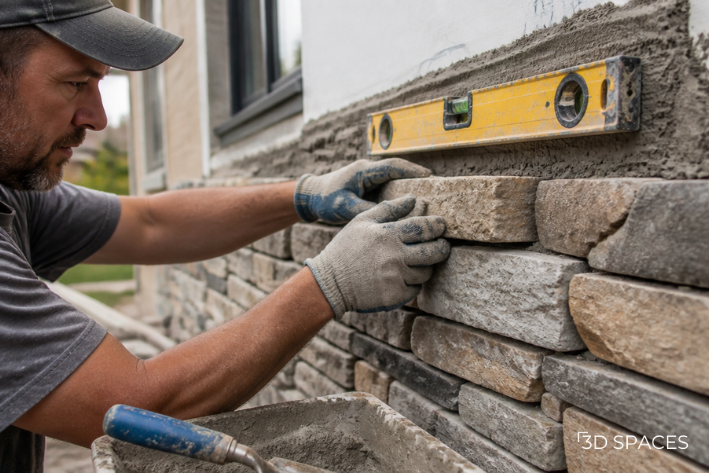
Wall Cladding installation in process
It is important to understand how the wall cladding is installed so that you are better prepared when the cladding is done and even in the middle of it. Here is a step-by-step guide
Step 1 — Preparation & Planning
Measure the wall, pick your stone, and waterproof exterior walls before anything else.
Step 2 — Surface Preparation
Clean the wall of dust, dirt, and loose paint. Fix a metal mesh if needed for better mortar grip.
Step 3 — Applying Mortar or Adhesive
Apply mortar or stone adhesive evenly—not too thick, not too thin. Always use what your stone supplier recommends.
Step 4 — Placing the Stones
Work bottom to top, press stones firmly, and decide your pattern here. This is where skill makes all the difference.
Step 5 — Grouting
Fill the gaps between stones with grout to seal out water. Match the grout colour to your stone for a clean, seamless look.
Step 6 — Cleaning & Sealing
Wipe off excess grout and residue. Seal porous stones like sandstone and limestone for long-term sun and water protection.
What is the difference between wet and dry installation?
This is the most common approach, where the mortar is applied directly to the wall and stones are pressed upon. This is suitable for thinner stones, and it is done without any drilling.
Dry method: Stones are secured using embedded metal anchors fixed into the wall. Best for thick, heavy exterior stone cladding. More expensive and labor-intensive, but extremely durable and long-lasting.
Stone Cladding vs Paint vs Tiles: Which is Right for You?
If you are a homeowner who is in the process of deciding between stone cladding vs. paint vs. tiles, here is a side-by-side comparison of the three on the basis of cost, lifespan, maintenance, water resistance, aesthetic impact, resale value boost, and whether it is DIY-friendly or not.
| Factor | Stone Wall Cladding | Wall Paint | Ceramic / Vitrified Tiles | Wallpaper |
|---|---|---|---|---|
| Cost | ₹120–₹600/sq ft | ₹15–₹60/sq ft | ₹80–₹400/sq ft | ₹30–₹100/sq ft |
| Lifespan | 20–50+ years | 5–10 years | 15–25 years | 5–8 years |
| Maintenance | Very low | Repainting every 3–5 years | Low | Medium (tears, peeling, replacement) |
| Water Resistance | Excellent (when properly sealed) | Poor | Excellent | Poor |
| Aesthetic Impact | Very high; rich texture and natural depth | Flat appearance with limited texture | Medium | Medium to high |
| Resale Value Boost | High | Low | Medium | Low |
| DIY-Friendly? | No, professional installation required | Yes | Partial | Partial |
"Stone cladding has a higher upfront cost than paint or wallpaper, but over a 10-year horizon it consistently wins on both aesthetics and total cost of ownership."
5 Common Stone Wall Cladding Mistakes to Avoid
Skipping waterproofing on exterior walls. Moisture seeping is the number one cause of structural damage and mold. Therefore, always waterproof before laying any exterior stone. This will give your stone wall cladding better durability.
Using the wrong adhesive or mortar. Different stones require different bonding agents. If you use the generic tile adhesive for heavy stone, you are setting up for panel damage within 2-3 years.
Ignoring grout colour. This is something that looks small but ends up ruining the entire aesthetic of your home; hence, you need to make a grout choice and do a section test before making the entire wall.
Not hiring a professional: Attempting large-area installation without a professional can create cumulative errors all the way to the top. Stone cladding is not a DIY project for walls larger than a small feature section.
Not sealing porous stones like sandstone or limestone. Unsealed porous stones absorb moisture and stains and eventually crack, especially in bathrooms or near cooking areas.
How 3D Spaces by Amenify India Can Help You
3D Spaces by Amenify India delivers end-to-end stone cladding solutions across Delhi NCR, combining expert design guidance, premium material sourcing, skilled installation, and seamless project management. Our team helps you choose the right stone for your space, ensures precise installation, maintains transparent pricing, and provides ongoing support for maintenance and care after project completion.
Get a free design consultation and itemized quote from our expert team. No obligation, full transparency, and 20% off on your first project.
FAQs
-
Stone wall cladding costs vary based on material type, design complexity, and installation, with natural stone generally being more expensive than artificial options. However, it offers long-term durability and adds significant value to your home.
-
Stone wall cladding is a decorative and protective layer of natural or artificial stone panels applied to walls, creating a textured, durable surface that enhances both interior and exterior spaces.
-
In India, stone wall cladding typically costs between ₹120 and ₹600 per square foot all-in (material + installation). Slate and sandstone are among the affordable materials, while premium choices like marble or travertine cost significantly more.
-
To clad a wall with stone, first prepare a clean, sturdy surface, apply adhesive or mortar, then carefully fix the stone panels or veneer, ensuring even spacing and proper alignment for a seamless finish.
-
It's not one stone that is perfect; you need to figure out the use case and then figure out the rest. For exterior walls, granite and quartzite are the most weather-resistant. For budget-friendly interior feature walls, Indian slate and sandstone offer excellent value. For a luxury look, marble and travertine are unmatched. For rustic, warm interiors, rough sandstone or fieldstone works beautifully.
-
Yes, exterior stone wall cladding is extremely popular and durable when installed correctly. The key requirements are: using a weather-resistant stone like granite or quartzite, proper waterproofing of the wall substrate before installation, and applying a quality sealant after installation.
-
Natural stone wall cladding can last 20-50 years or longer when installed correctly and maintained properly. Artificial stone cladding typically lasts 15–25 years.
-
Yes. Stone cladding can be applied to most existing wall surfaces like that of brick, concrete, cement plaster, and even drywall (for lightweight artificial stone).
-
For feature walls and exterior elevations, stone cladding generally offers a more distinctive, high-end aesthetic and better long-term value than tiles. Tiles are more practical for wet areas like bathrooms and kitchens due to easier cleaning. For living rooms, bedrooms, and exteriors, stone cladding is hard to beat for visual impact and durability.
-
Clean with a soft brush and mild soap solution twice a year. Avoid acidic cleaners on marble or limestone. Re-seal porous stones every 2–3 years. Inspect grout lines annually and re-grout any cracked sections. For exterior walls, check after the monsoon season for any signs of moisture, moss, or efflorescence.